
Solar Mounting Waterproofing: Seal vs System Weather Resistance
A solar mounting attachment can include EPDM washers, rubber gaskets, butyl tape, sealant or flashing. These materials help control water entry at specific interfaces, but their presence does not automatically make the complete roof attachment waterproof.
Waterproofing is a system-level performance issue, not simply a sealing-material selection issue.
The result depends on the roof construction, penetration detail, attachment geometry, drainage path, material compatibility, installation quality and exposure conditions.
For buyers, installers and mounting-system suppliers, the important question is not just whether a product includes a rubber washer. It is whether the complete roof attachment detail is suitable for the roof and has adequate evidence for its intended application.
1. A seal is not the same as weather resistance
A sealing component performs a local function. For example:
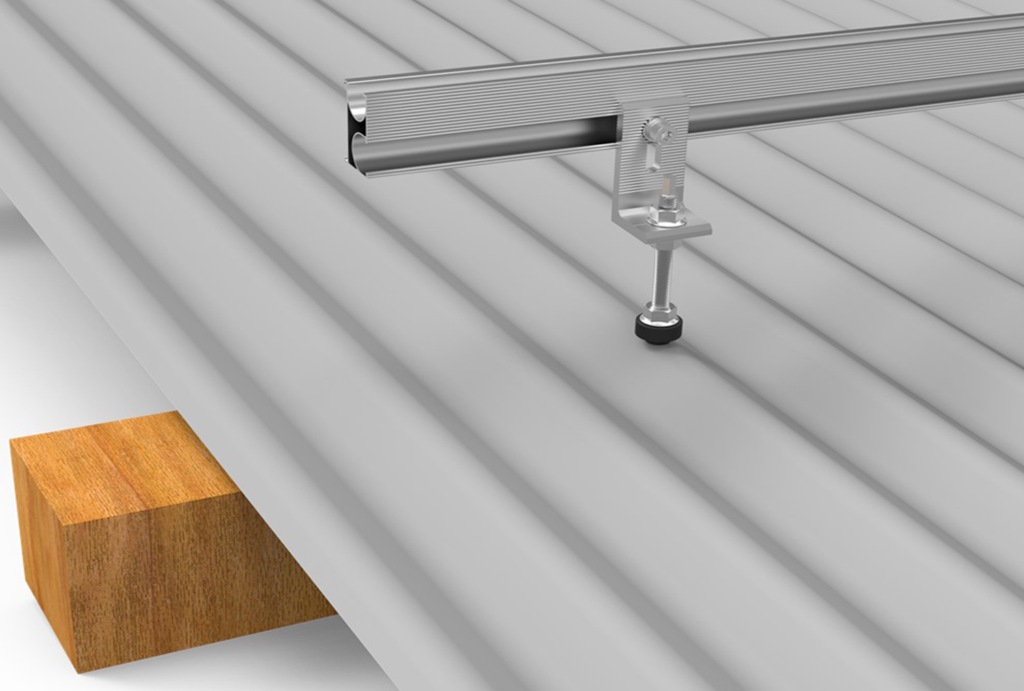
An EPDM washer can seal around a fastener.
A rubber gasket can provide a sealing interface beneath a mounting bracket.
Butyl tape can seal a defined overlap or contact interface.
Flashing can redirect water around a roof penetration.
A sealant can close a specified joint or gap.
However, the complete roof attachment has to manage more than the immediate contact point.
It must account for:
Water reaching the attachment.
Water flowing around the bracket or roof profile.
Water entering through a penetration or joint.
Water draining away without becoming trapped.
Movement caused by thermal expansion and contraction.
Changes in material condition over time.
Installation variation and maintenance conditions.
A seal may be correctly installed at one interface while water enters through another part of the roof detail.
This is why the following statements are not equivalent:
| Statement | What it actually tells you |
|---|---|
| Includes an EPDM washer | A sealing component is included |
| Has a pre-applied gasket | A defined interface gasket is provided |
| Uses sealant or butyl tape | A sealing material is specified |
| Passed a water test | A defined test specimen met the stated test criteria |
| Suitable for a roof application | The complete arrangement has been assessed for a defined roof configuration |
The last two statements require evidence. They should not be inferred from the presence of a sealing material.
2. Understand the complete waterproofing path
A typical roof-mounted PV attachment creates an interface between the mounting hardware and the existing roof construction.
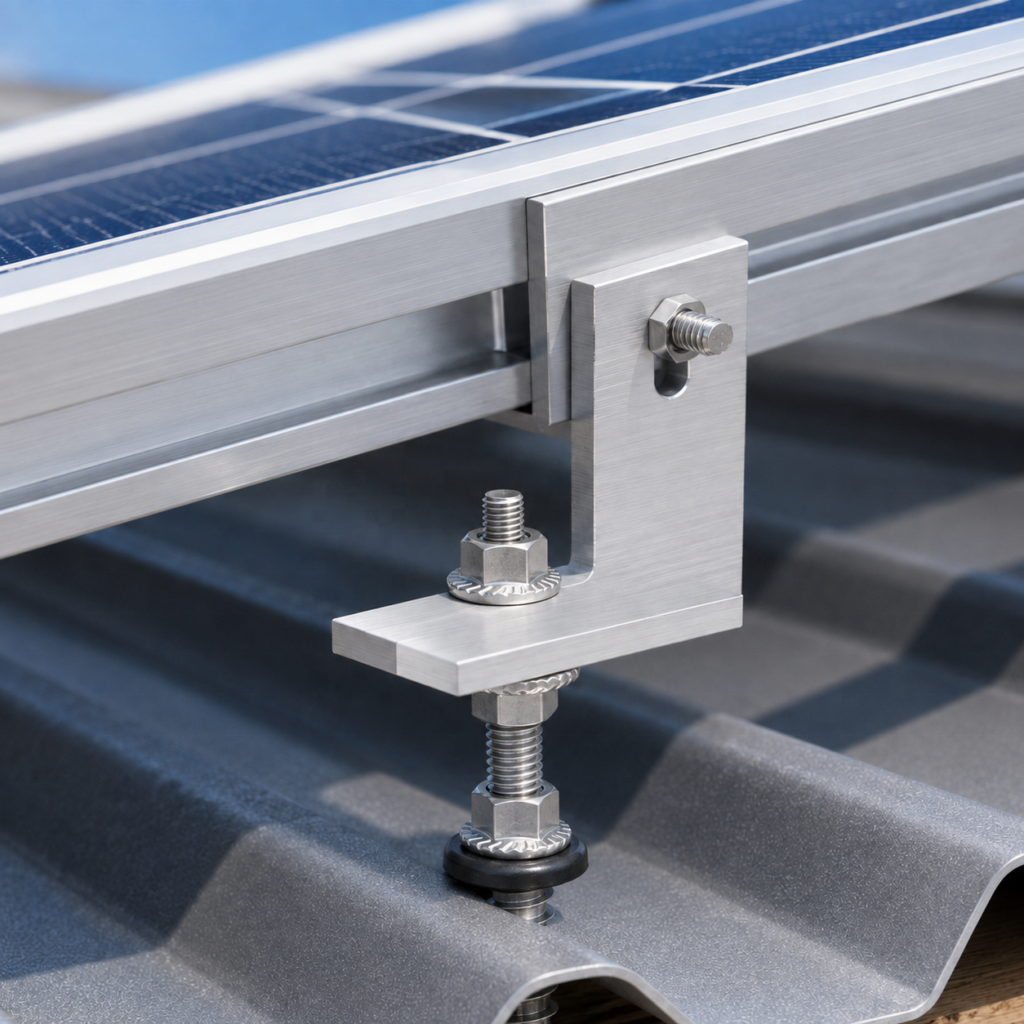
The detail may include:
Roof covering or metal roof panel.
Fastener or structural attachment.
Washer, gasket or sealing layer.
Bracket base or mounting component.
Flashing or cover component, where required.
Roof drainage path.
Supporting roof structure.
Each part has a different function.
For example, the fastener may transfer structural loads into a purlin or rafter, while the washer and flashing manage water around the penetration.
The structural and waterproofing functions are connected, but they are not interchangeable.
A mechanically adequate attachment does not automatically provide weather resistance. Likewise, a detail that does not leak during a limited water test does not automatically establish structural adequacy.
A useful way to review a roof attachment is to follow two separate paths.
Structural path
PV module → module clamp → rail → roof attachment → fastener → supporting structure
Water-management path
Rainwater → roof surface → attachment interface → flashing or sealing detail → drainage path
Both paths need to work in the same installed configuration.
3. Why EPDM and rubber washers are not universal waterproofing solutions
EPDM is widely used in solar mounting components because it can provide a compliant sealing interface when correctly specified and installed.
But an EPDM washer does not guarantee that every roof penetration will remain watertight.
Its performance depends on several factors.
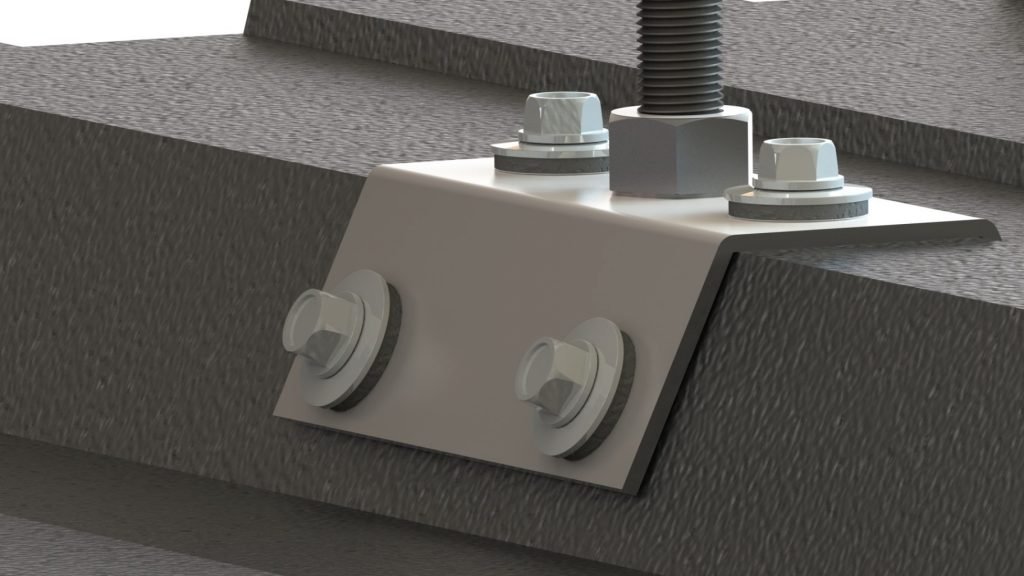
Washer geometry
The washer must be suitable for the fastener, hole, bracket and roof surface. Relevant dimensions include:
Outer diameter.
Inner diameter.
Thickness.
Contact area.
Shape and profile.
Position relative to the fastener and bracket.
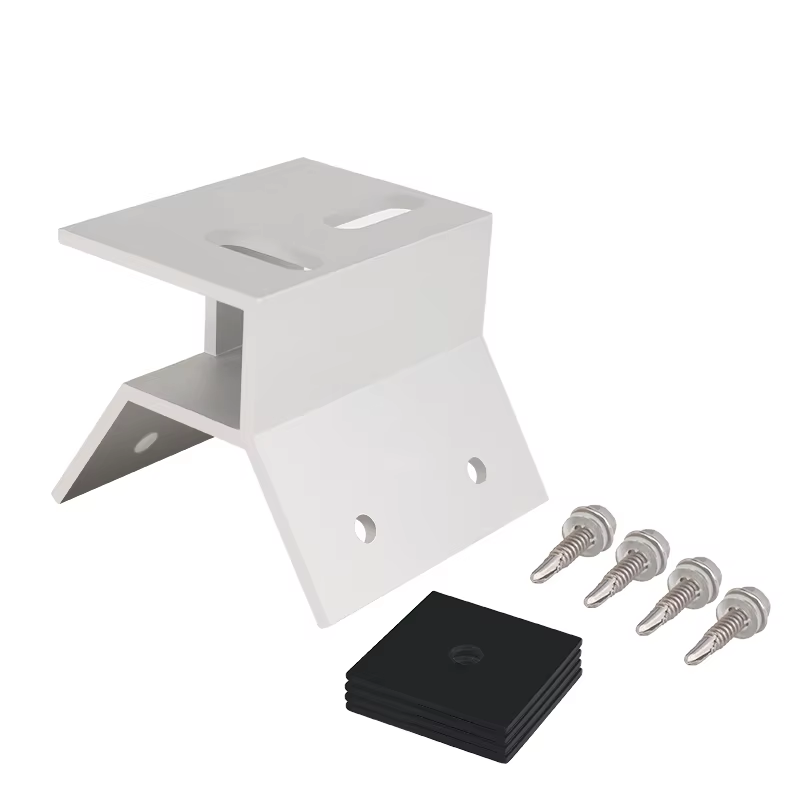
A washer that is too small may not cover the intended sealing area. A washer with unsuitable geometry may not conform to the contact surface.
Compression
The washer needs the correct compression for its intended application.
Insufficient compression may leave a leakage path. Excessive compression may damage or distort the sealing component. The correct tightening procedure must come from the applicable mounting-system documentation.
There is no universal torque value that can be applied to every solar roof attachment.
Material compatibility
The washer material should be suitable for the environment and the materials with which it comes into contact.
Consider:
Temperature exposure.
UV exposure.
Water and moisture.
Chemical contact.
Contact with roof coatings.
Compatibility with adjacent materials.
Expected compression and movement.
A material description such as EPDM alone does not establish the durability of the complete sealing arrangement.
Installation condition
Even a suitable washer can fail to perform as intended if:
It is damaged before installation.
It is incorrectly positioned.
The contact surface is dirty or uneven.
The fastener is misaligned.
The washer is over-compressed.
The roof surface is damaged.
The specified installation sequence is not followed.
The sealing component and installation method must therefore be evaluated together.
4. Why flashing may be necessary
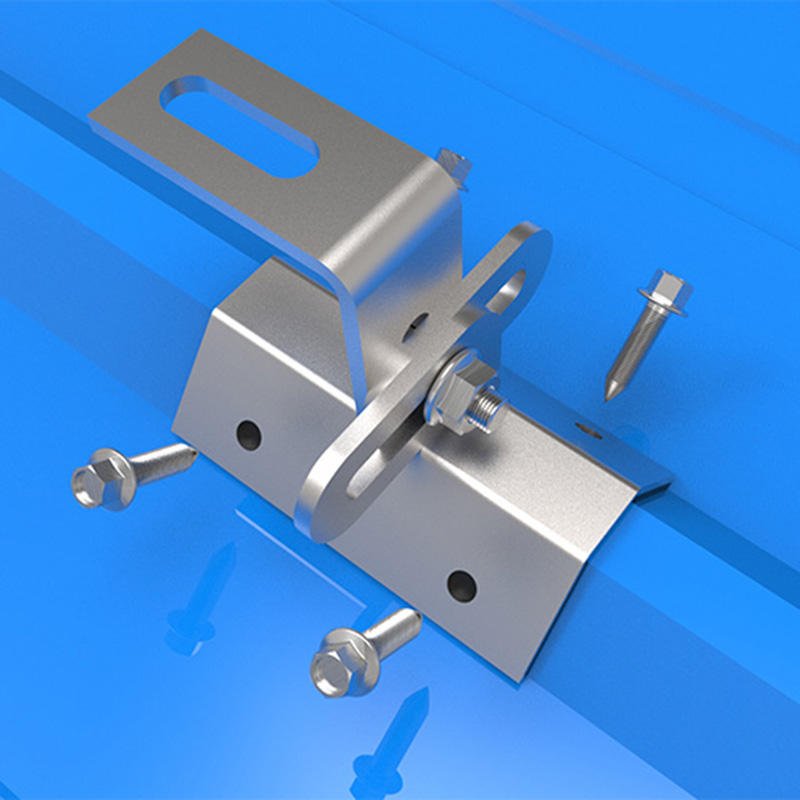
Some roof attachments require more than a washer or gasket.
Flashing is used in many roof systems to manage water around penetrations and direct it back onto the intended drainage surface.
Its role depends on the roof construction and the attachment detail.
For example, a roof attachment may require a dedicated flashing component that:
Extends beneath or around the roof covering.
Directs water away from the penetration.
Integrates with the roof’s drainage plane.
Provides a defined interface with the mounting bracket.
Accommodates the roof profile and covering thickness.
Flashing is not automatically required for every mounting product, nor does adding a piece of flashing guarantee a successful detail.
The correct arrangement depends on the roof system and the manufacturer’s installation instructions.
For tile and shingle roofs, the flashing detail may be particularly important because water management depends on the way overlapping roof coverings direct water downslope.
For metal roofs, the attachment detail must account for the panel profile, seams, fastener position and water-shedding direction.
A flashing design intended for one roof construction should not be assumed suitable for another.
5. Waterproofing considerations for different roof attachment types
The same sealing principle cannot be applied to every solar mounting component.
Different roof attachment methods create different interfaces and potential water-entry paths.
5.1 Trapezoidal and corrugated metal roof attachments
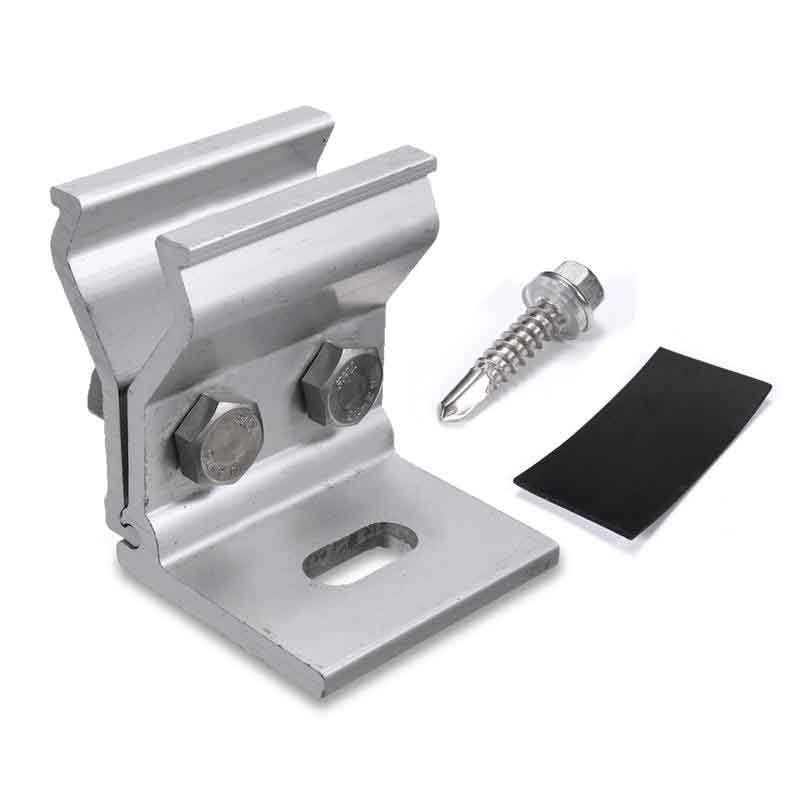
Exposed-fastener metal roof attachments commonly use self-tapping screws, washers, EPDM gaskets or pre-applied sealing materials.
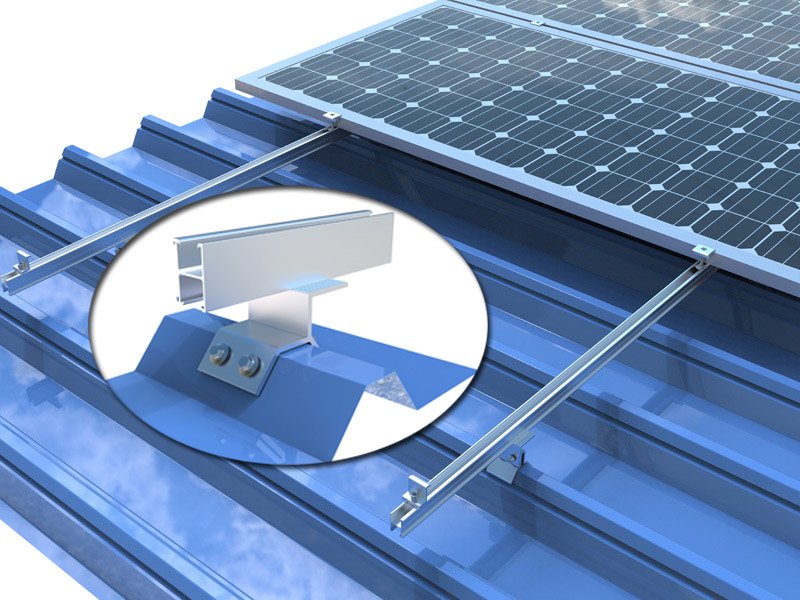
Important variables include:
Metal sheet profile and thickness.
Fastener position.
Screw alignment.
Washer dimensions.
Bracket-base geometry.
Roof-panel condition.
Water flow around the attachment.
Distance from seams and drainage channels.
The screw must engage the intended supporting structure or roof construction according to the mounting-system design.
The sealing detail must also be compatible with the actual roof profile.
A gasket designed for one bracket base or sheet profile should not automatically be used with a different geometry.
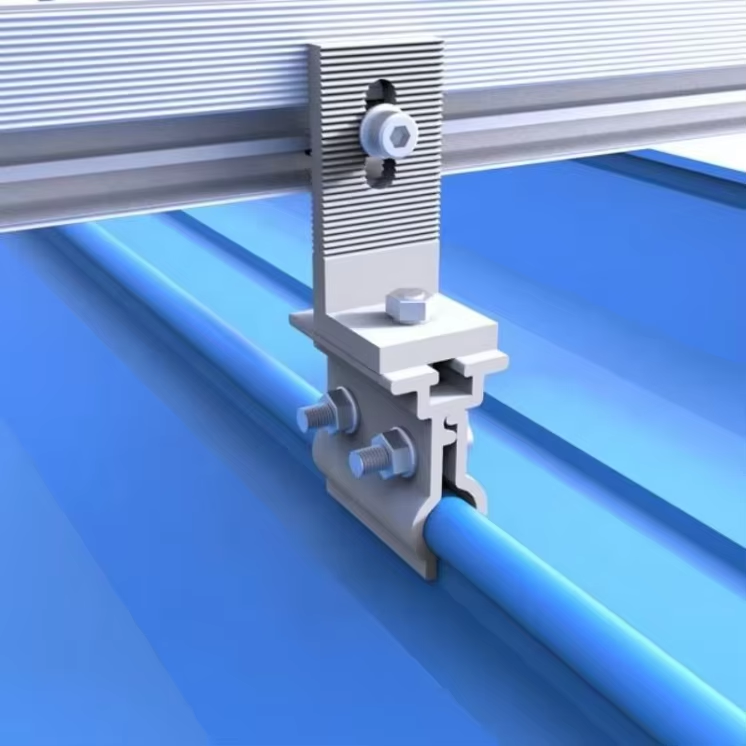
5.2 Standing seam roof clamps
Standing seam clamps generally attach to the raised seam without requiring a conventional through-panel fastener penetration.
This can avoid creating additional holes through the roof panel at the clamp location.
However, it does not mean that every standing seam mounting arrangement is automatically waterproof or suitable for every roof.
The roof system still has:
Panel seams and end laps.
Roof penetrations elsewhere.
Thermal movement requirements.
Roof drainage paths.
Existing flashings and perimeter details.
The clamp must also be compatible with the seam profile and installed according to the roof and mounting-system requirements.
Avoid describing all standing seam clamps as universally penetration-free or universally waterproof without checking the actual product and installation configuration.
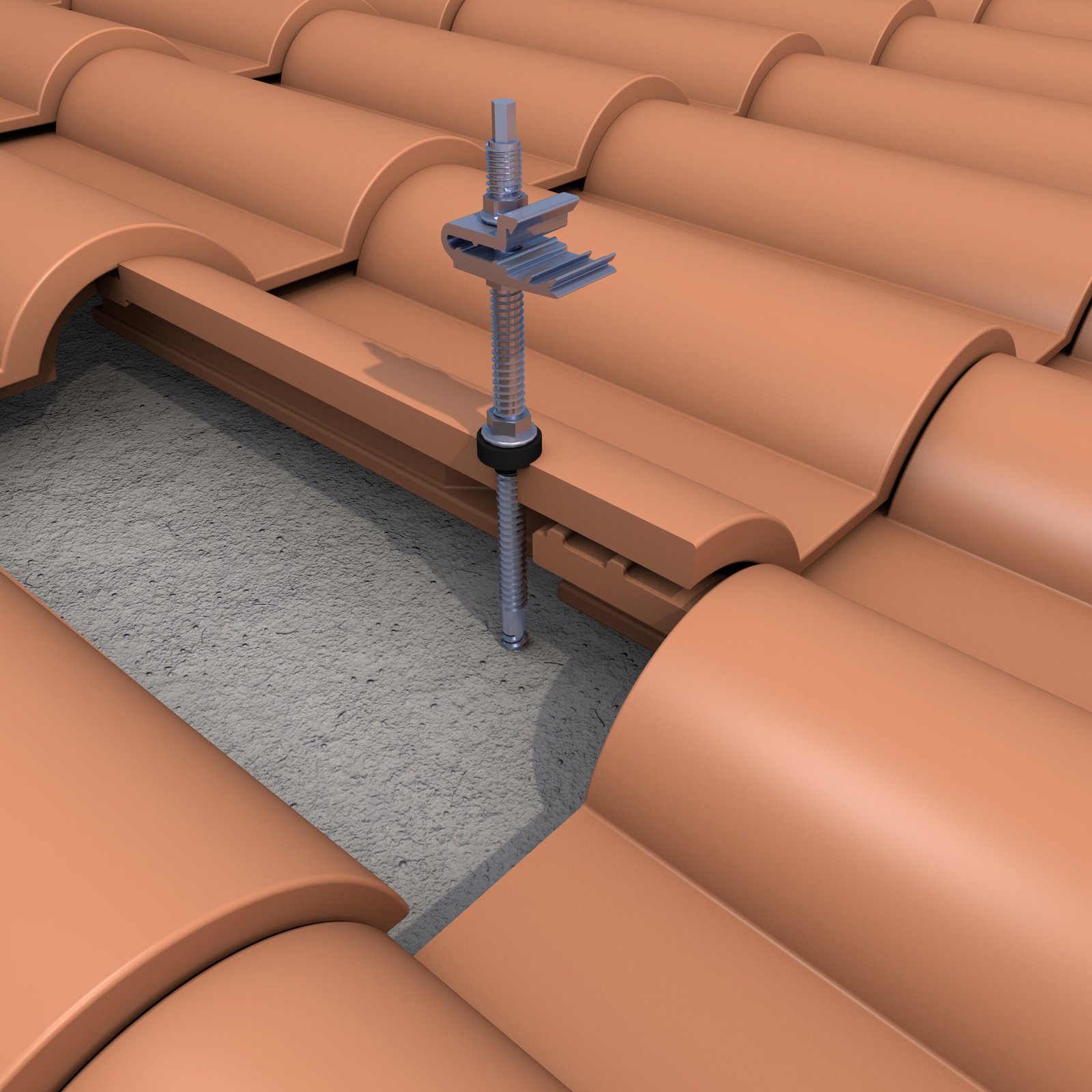
5.3 Hanger bolt roof attachments
A hanger bolt may penetrate the roof covering and connect to a timber rafter or another defined supporting structure.
This creates two separate engineering questions:
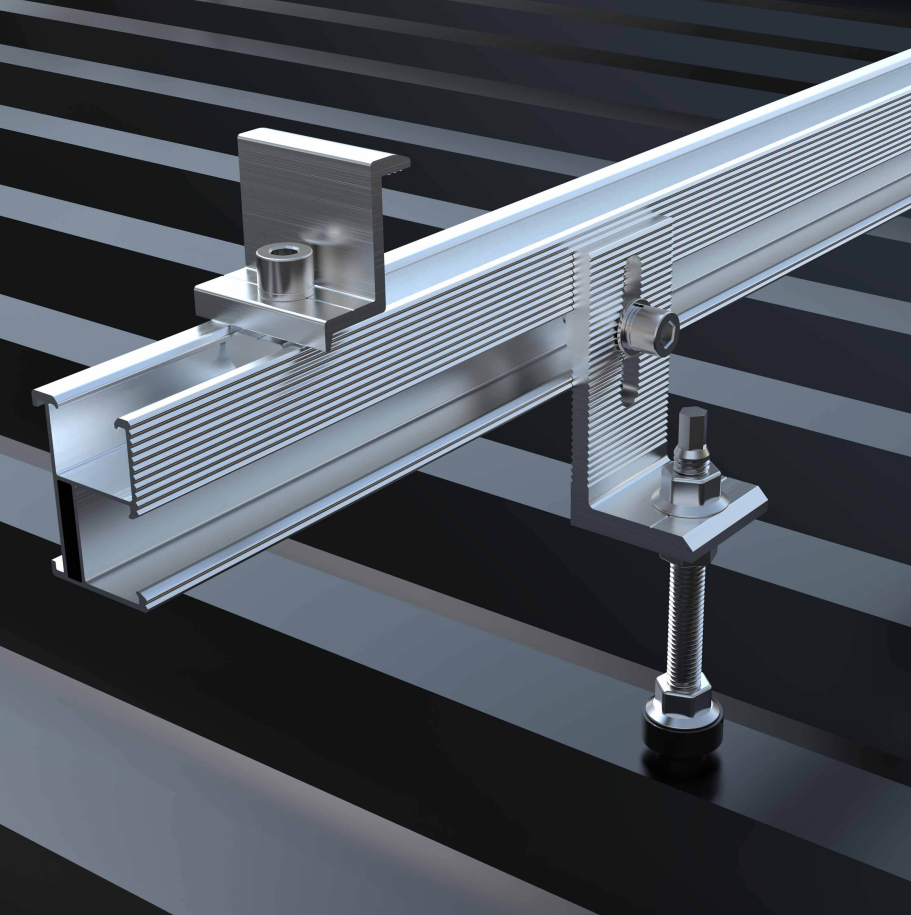
Does the fastener provide the required structural connection?
Does the penetration detail control water entry?
Relevant waterproofing variables include:
Roof-covering thickness.
Penetration location.
Hole preparation.
Washer and sealing geometry.
Bracket position.
EPDM compression.
Flashing or additional sealing requirements.
Installation alignment.
An EPDM washer can be part of the sealing arrangement, but it should not be treated as a universal substitute for a roof-specific flashing or sealing detail. The structural fastener must also engage the intended supporting member. A sealed penetration does not correct an incorrectly located or structurally inadequate fastener.
5.4 Tile roof hooks
Tile roof hooks require careful consideration of the roof covering and the underlying structural attachment.
The hook may pass beneath or around a tile, while its fixing connects to a rafter or other supporting structure.
The waterproofing detail must preserve the roof’s intended water-shedding arrangement.
Check:
Tile type and profile.
Hook position.
Tile clearance and fit.
Underlying flashing or sealing arrangement.
Any required tile modification.
Drainage around the hook.
Roof-covering condition after installation.
A tile hook that fits beneath a tile does not automatically provide an adequate waterproofing detail.
Tile protection, structural attachment and weather resistance should be checked separately.
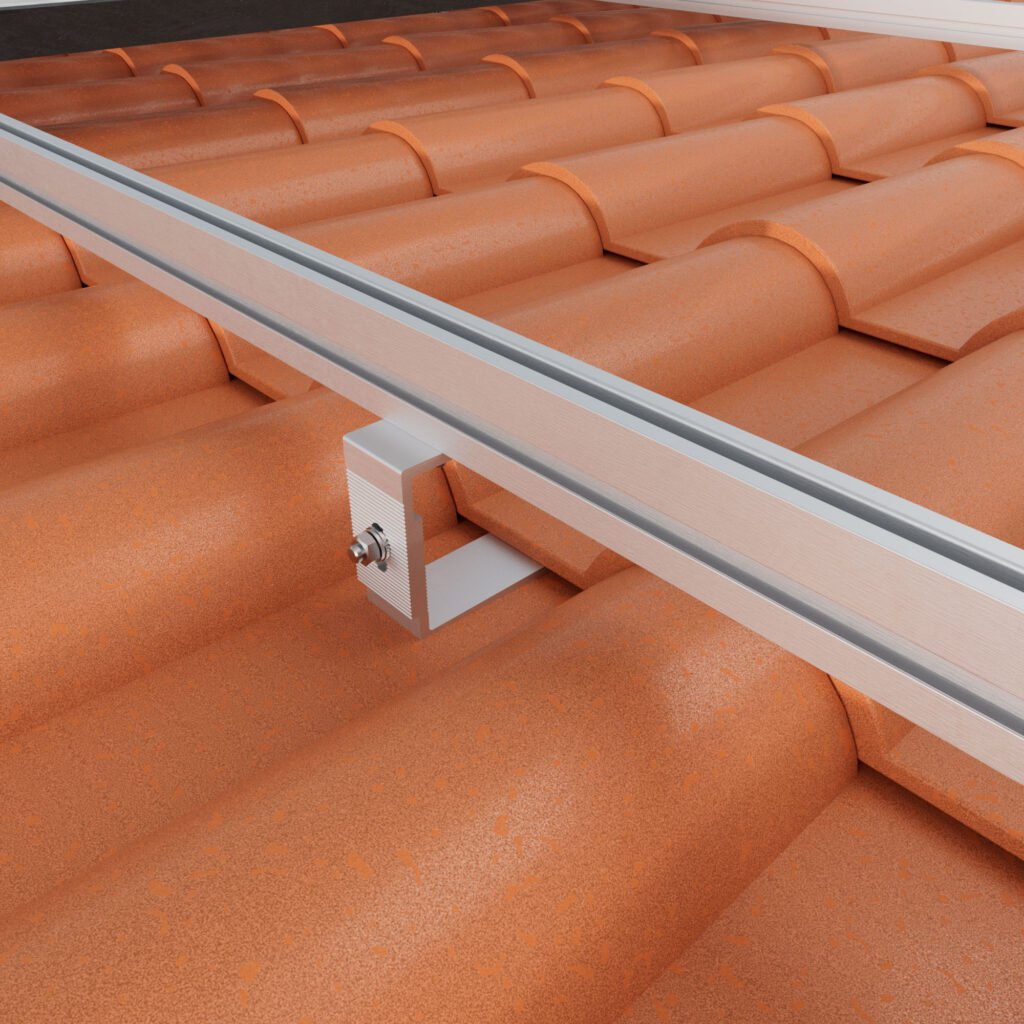
5.5 L Foot and other roof-mounted brackets
An L Foot may connect to a roof fastener, hanger-bolt assembly, tile hook or another attachment component. Its waterproofing performance depends on the roof attachment detail beneath it.
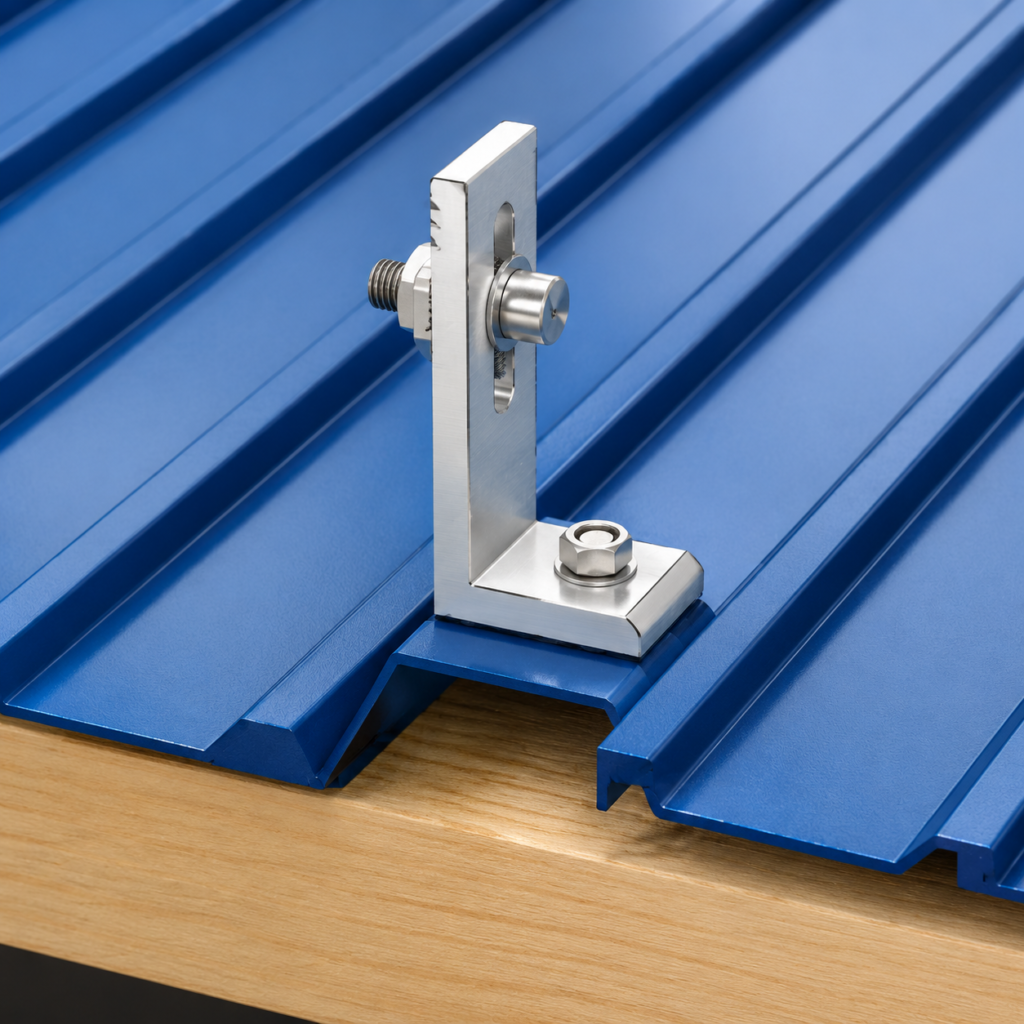
The L Foot itself is not necessarily the component that provides the roof seal. The relevant assessment may include:
Roof penetration.
Fastener and washer.
Bracket base.
Flashing.
EPDM or other sealing material.
Drainage.
Installation torque and alignment.
Do not assume that a suitable L Foot automatically makes the roof connection waterproof.
6. What can cause a roof attachment to leak?
The following table summarizes common risk conditions. These are potential failure mechanisms, not a claim that every occurrence will produce leakage.
| Risk condition | Possible consequence | What to check |
|---|---|---|
| Incorrect fastener position | Water may enter through an unsuitable location | Roof profile, drainage path and approved attachment position |
| Damaged roof surface | Existing protective or sealing layer may be compromised | Surface condition before and after installation |
| Incorrect washer size | Inadequate sealing contact | Washer dimensions and compatibility |
| Under-compressed gasket | Potential leakage path | Installation sequence and specified compression |
| Over-compressed gasket | Washer distortion or damage | Correct torque and installation method |
| Misaligned fastener | Uneven contact or damaged sealing interface | Fastener alignment and pilot-hole requirements |
| Incompatible sealant | Poor adhesion or material degradation | Manufacturer compatibility information |
| Missing flashing | Incomplete water-management detail where flashing is required | Roof-specific installation instructions |
| Blocked drainage | Water may accumulate around the attachment | Roof slope, profile and drainage path |
| Thermal movement not accommodated | Joint or sealing material may be stressed | Roof and mounting-system movement requirements |
| Poor installation workmanship | The designed detail may not be reproduced | Inspection and installation QA |
A recurring mistake is to focus only on the sealing material while ignoring the surrounding roof geometry.
The correct question is not simply whether a washer is present. It is whether the complete detail manages water as intended.
7. What do waterproofing test standards actually demonstrate?
Testing can provide useful evidence, but the test method and specimen scope must be understood before interpreting the result.
Two relevant ASTM test methods for metal roof panel systems illustrate why different water-exposure conditions should not be confused.
ASTM E1646 — Water penetration under static air pressure difference
ASTM E1646 is titled:
Standard Test Method for Water Penetration of Exterior Metal Roof Panel Systems by Uniform Static Air Pressure Difference.
It evaluates water penetration when water is applied to the exterior face while a positive static air-pressure difference is maintained across the specimen.
The scope includes water penetration associated with the roof-panel field, including side laps and structural connections, when the relevant details are visible and the source of leakage can be identified.
However, the method does not cover every roof detail. Its scope excludes openings, perimeter conditions and other details outside the defined specimen.
ASTM also cautions that the test method alone should not be used to draw conclusions about overall water penetration through metal roofs.
Therefore, an E1646 test result should be interpreted in relation to the tested specimen, roof construction, pressure conditions and details included in the test.
ASTM E2140 — Water penetration under static water pressure head
ASTM E2140 is titled:
Standard Test Method for Water Penetration of Metal Roof Panel Systems by Static Water Pressure Head.
It evaluates water penetration through metal roof panel system side seams, end laps and roof-plane penetrations under a specified static water pressure head.
This is a different exposure condition from E1646.
ASTM E2140 specifically notes that it does not evaluate resistance to wind-driven rain and is not a structural adequacy test.
The distinction matters because a test under static water pressure head and a test under water application with static air-pressure difference do not demonstrate identical performance.
What should a buyer take from these standards?
| Question | Why it matters |
|---|---|
| Which test method was used? | Different methods represent different water-exposure conditions |
| What roof construction was tested? | Results apply to the defined specimen |
| Were the actual mounting attachments included? | A panel-only test may not represent the PV attachment detail |
| Were penetrations and sealing components included? | These may be critical leakage paths |
| What pressure and exposure conditions were used? | The result must be interpreted within the test conditions |
| What was the acceptance criterion? | A test result needs a clear pass/fail basis |
| Were the tested details representative of the project? | Applicability must be established before relying on the result |
A test certificate or report should never be reduced to a generic statement such as “waterproof tested” without explaining what was actually tested.
8. How should a waterproofing test be designed for a solar mounting attachment?
If a project requires additional water-resistance evidence, the test specimen should represent the relevant roof attachment detail as closely as practical. At minimum, the test plan should identify:
Roof construction
Roof material.
Panel or covering profile.
Sheet thickness or covering type.
Roof slope.
Supporting structure.
Relevant roof joints and overlaps.
Mounting attachment
Attachment product and dimensions.
Fastener type and position.
Washer or gasket specification.
Flashing and sealing materials.
Bracket-base geometry.
Installation sequence.
Tightening requirements.
Test conditions
Test method.
Water application method.
Pressure or water-head conditions.
Test duration.
Specimen dimensions.
Boundary conditions.
Leakage observation method.
Acceptance criteria.
Test result
The report should clearly state:
Whether leakage occurred.
Where leakage occurred.
Whether the result met the specified acceptance criteria.
Whether the specimen was modified or repaired during testing.
Whether the tested configuration represents the intended application.
A test on one metal roof profile should not automatically qualify a different profile, roof thickness, fastener arrangement or mounting product.
Likewise, a test on one attachment detail should not be presented as proof that every roof attachment in the product range is waterproof.
9. How to inspect waterproofing quality during installation
A good waterproofing design still depends on correct installation.
An installation inspection should be based on the applicable product and roof-system instructions.
A practical checklist includes:
Before installation
Confirm the roof type and profile.
Check the attachment location.
Confirm the required fastener and sealing components.
Inspect the roof surface.
Check that the washer, gasket and flashing are correct and undamaged.
Confirm any required pilot-hole or preparation method.
During installation
Keep fasteners correctly aligned.
Follow the specified installation sequence.
Avoid damaging the roof surface.
Use the specified washer and sealing components.
Apply the documented tightening procedure.
Install flashing and sealant where required.
Keep drainage paths clear.
After installation
Check for visible damage.
Inspect washer and gasket positioning.
Check that the bracket is seated correctly.
Confirm that no unintended gaps or drainage obstructions remain.
Record the installation configuration.
Conduct additional inspection or testing where the project specification requires it.
Do not add extra sealant as an automatic remedy for every installation issue. Additional material may hide an incorrect detail rather than correct it.
Any repair should follow the roof or mounting-system manufacturer’s approved procedure.
10. What should buyers request from a solar mounting supplier?
For a project involving roof penetrations or exposed roof attachments, ask the supplier to provide more than a product photograph or a statement that the product includes EPDM.
A useful technical request should include:
| Requested information | Purpose |
|---|---|
| Roof compatibility information | Confirm the intended roof type and profile |
| Product installation manual | Check the approved installation method |
| Fastener and washer specification | Verify the attachment and sealing components |
| Flashing or bracket-base drawing | Understand the water-management detail |
| Material specifications | Review compatibility and environmental suitability |
| Test report, if available | Understand the tested configuration and conditions |
| Repair or replacement procedure | Know how damaged or incorrectly installed details should be handled |
| Project-specific approval, where required | Confirm suitability for the actual roof construction |
For custom or OEM products, the supplier should also identify which parts of the design are standard and which require project-specific review.
A supplier should not claim universal waterproofing simply because a product has a rubber washer or has passed a test on one roof configuration.
11. Conclusion: Evaluate the complete roof detail, not just the seal
EPDM washers, rubber gaskets, butyl tape, sealant and flashing all have useful roles in solar mounting waterproofing.
But none of these materials alone proves the weather resistance of a complete roof attachment.
The final performance depends on the roof construction, attachment geometry, sealing arrangement, drainage, material compatibility, installation and the conditions represented by any available test evidence.
For buyers and installers, the most reliable approach is to verify the complete roof detail and request evidence that matches the intended application.
A sealing component is one part of a waterproofing system. It is not proof of the system’s weather resistance.
Frequently Asked Questions.
Not by itself. EPDM can provide a sealing interface when correctly specified and installed, but the complete roof detail, including the fastener, bracket, penetration, drainage and any required flashing, must be considered.
A water test demonstrates the performance of the defined specimen under the stated test conditions. It does not automatically qualify every roof type, attachment configuration or building detail.
ASTM E1646 evaluates water penetration under water application with a positive static air-pressure difference. ASTM E2140 evaluates water penetration under a specified static water pressure head. They represent different test conditions and should not be treated as interchangeable.
They can avoid additional through-panel penetrations at the clamp location in many systems, but they do not eliminate all roof waterproofing risks. Roof seams, end laps, existing penetrations and other details still require appropriate design and inspection.
Not automatically. The cause of leakage should first be identified. The correct repair depends on the roof system and mounting-system instructions. Additional sealant may not correct incorrect fastener positioning, damaged roof material or an unsuitable flashing detail.
No. A water-penetration test evaluates water resistance under its defined conditions. Structural capacity requires separate engineering evidence or testing appropriate to the load path and connection configuration.