
Pull-Out vs Pull-Through on Trapezoidal Roofs: Understanding Fastener Failure
When a solar mounting attachment fails on a trapezoidal metal roof, the first question is not simply whether the screw is strong enough. It is which part of the connection is likely to fail, and under what loading conditions?
Two important failure modes are pull-out and pull-through. They are related, but they are not interchangeable.
Pull-out: the fastener withdraws from the material into which it is anchored.
Pull-through: the roof sheet fails around the fastener head or washer, allowing the fastener to pass through the damaged sheet.
A screw can remain intact while the roof sheet fails. Equally, a roof sheet may resist local pull-through while the fastener loses its anchorage in the supporting member.
For solar mounting, both mechanisms must be considered within the actual attachment assembly.
1. What Is the Difference Between Pull-Out and Pull-Through?
Pull-out: the fastener loses its anchorage
Pull-out occurs when a fastener is extracted from the material that holds it. Depending on the assembly, that material may be a thin roof sheet, a steel purlin, a timber support or another substrate.
The resistance depends on the fastener and the material it engages. Relevant variables include:
Fastener type, diameter and thread geometry
Substrate material and thickness
Effective thread engagement or embedment
Fastener installation and hole condition
Load direction and the condition of the supporting member
A larger screw does not automatically provide a proportionally higher pull-out resistance. The screw must engage a suitable substrate, and the installed connection must be assessed in its actual configuration.
Pull-through: the roof sheet fails around the fastener
Pull-through occurs when the sheet material around a fastener head or washer deforms, tears or splits sufficiently for the fastener to pass through.
On thin trapezoidal steel roofing, this can occur under wind uplift. The fastener may remain attached to the supporting purlin while the roof sheet fails locally around its head or washer.
The relevant variables include:
Sheet thickness and mechanical properties
Roof profile and local geometry around the fixing
Fastener head and washer dimensions
Fastener location on the profile
Support spacing and deformation of the sheet
Installation damage, including splitting around the fastener hole
Loading history, including repeated wind loading
The sheet and fastener head form part of the structural connection. Their interaction matters as much as the nominal strength of the screw.
2. Why This Matters for Solar Mounting
A trapezoidal roof attachment transfers loads through several connected components. Depending on the design, the load path may involve:
PV module → module clamp → rail → roof bracket → roof sheet and fastener → purlin or other supporting structure
The exact load path varies with the attachment design. A sheet-only attachment and a bracket fastened through the sheet into a structural purlin are not the same structural system.
Consider two possible failures:
The fastener withdraws from the supporting member. This is a pull-out problem.
The fastener remains anchored, but the thin roof sheet tears around its head. This is a pull-through problem.
Both can compromise the attachment. Neither can be ruled out simply because the screw has a high tensile-strength rating or the bracket looks substantial.
The first engineering task is to identify the intended load path and the potential governing failure modes.
3. What Governs Pull-Out Resistance?
Pull-out resistance is determined by the interaction between the fastener and the material providing its anchorage.
For a screw engaging a thin metal sheet, the available thread engagement may be limited by the sheet thickness and the screw geometry. For a screw engaging a purlin, the purlin material, thickness and effective engagement become important.
The distinction matters because the same fastener may behave differently in different substrates.
Before using a pull-out value, establish:
Where the fastener is anchored. Is it engaging the roof sheet, a steel purlin, timber or another supporting member?
What material is being engaged. Identify the substrate and its relevant properties.
How the fastener is installed. Confirm the fastener specification, hole preparation where applicable, engagement and installation condition.
What load is being evaluated. Withdrawal, shear and combined loading should not be treated as equivalent.
What the test actually represents. A test on one substrate or fastener configuration does not automatically qualify another.
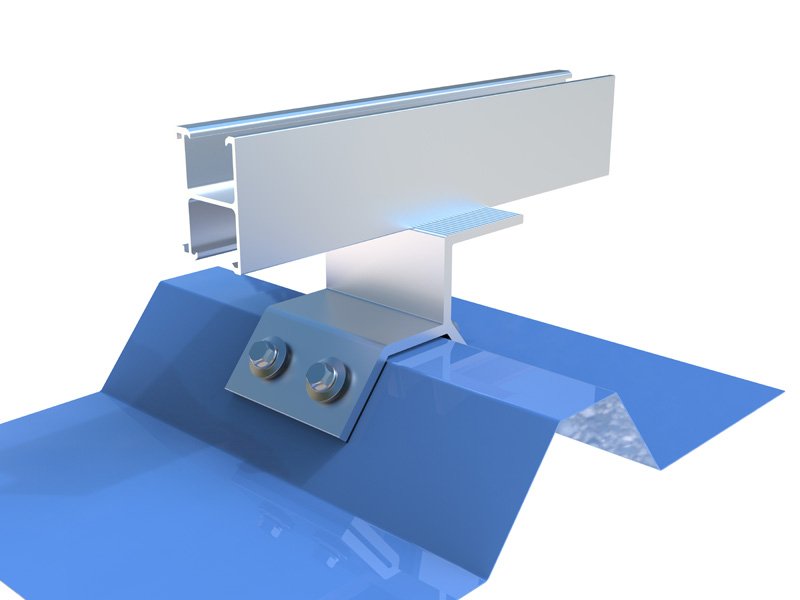
Fastener tensile strength is not the same as installed pull-out resistance. Nor does a pull-out test alone establish the capacity of the complete solar mounting connection.
4. What Governs Pull-Through Resistance?
Pull-through is especially important where thin metal roof sheets transfer uplift forces through fastener heads or washers.
Under uplift, the sheet around the fixing is subjected to local stresses and deformation. Depending on the profile and material, the sheet may develop local dimpling, tearing or splitting before the fastener itself fails.
Research by Mahendran and Mahaarachchi documented splitting failures in trapezoidal steel roof cladding and identified overtightening and damage around fastener holes as relevant concerns. Later research has also investigated how roof profile geometry affects dimpling-type and splitting-type pull-through failures.
These findings do not establish one universal pull-through capacity for trapezoidal roofs. They demonstrate why the roof sheet, fixing geometry and installation condition need to be considered together.
Key questions include:
Is the sheet steel or aluminum?
What are its thickness and relevant material properties?
Is the fastener located on the crest or another part of the profile?
What are the head and washer dimensions?
What is the distance to nearby edges, ribs and other fixings?
What support condition was used in the test?
Was the assembly tested under the relevant load direction?
Was any local deformation, splitting or cracking observed before final failure?
A washer with a larger bearing area may change the local stress distribution, but its presence alone does not prove a particular capacity. Its effect must be assessed for the actual sheet and fixing configuration.
5. Pull-Out and Pull-Through Are Not the Only Possible Failures
A roof attachment may also be governed by other mechanisms, including:
Fastener shear or failure of the fastener itself
Tearing of the sheet away from the fixing
Local deformation of the roof rib or crest
Bracket deformation or failure
Failure at the rail-to-bracket connection
Failure in the purlin or another supporting member
Progressive damage under repeated loading
These mechanisms can interact. A connection may show local deformation before the final failure, and a test that records only the maximum load may not provide enough information to understand the failure process.
For this reason, a meaningful engineering assessment should identify the observed failure mode, not just report a peak load.
6. How to Evaluate a Pull-Out or Pull-Through Test Report
A useful report should allow the reader to determine whether the tested configuration represents the proposed project.
Check the test specimen
Look for the roof profile, sheet material, thickness, fastener specification, washer or head geometry, bracket arrangement and support conditions.
If the test uses a different sheet thickness, profile or supporting member, its result should not be transferred without an engineering basis.
Check the load direction and setup
Confirm whether the test evaluates withdrawal, pull-through, uplift or another loading condition. Understand how the specimen was supported and how the load was applied.
For example, ASTM E1592-25 addresses structural performance testing of sheet-metal roof and siding systems under uniform static air-pressure differences, including trapezoidal panels and anchor-to-panel attachments. The scope and specimen configuration still need to be checked against the question being assessed.
Check the reported failure mode
A report should state what failed and, where relevant, show photographs or observations of the failure.
Ask whether the failure occurred in the fastener, the roof sheet, the supporting member or another part of the assembly. A high test load is difficult to interpret without knowing the failure mechanism.
Check how the result is used
A maximum test load is not automatically a project design resistance. The applicable design method, safety or reduction factors, variability, load combinations and installation conditions must be addressed.
A static test also does not, by itself, establish long-term fatigue resistance under repeated wind loading.
7. What Information Should Be Confirmed Before Selecting a Trapezoidal Roof Attachment?
Before selecting or qualifying an attachment, establish the following information.
Roof and support
Roof manufacturer and profile
Rib height, crest width and relevant profile dimensions
Sheet material and thickness
Purlin or supporting-member material, dimensions and spacing
Existing fastener arrangement, where relevant
Attachment
Bracket type and geometry
Fastener type, dimensions and material
Head or washer configuration
Number and position of fasteners
Whether the attachment is sheet-only or engages a structural support
Project and verification
Project location and applicable design requirements
Wind uplift and other relevant design actions
Roof zones and proposed attachment spacing
Available test reports or engineering calculations
Installation requirements and limitations
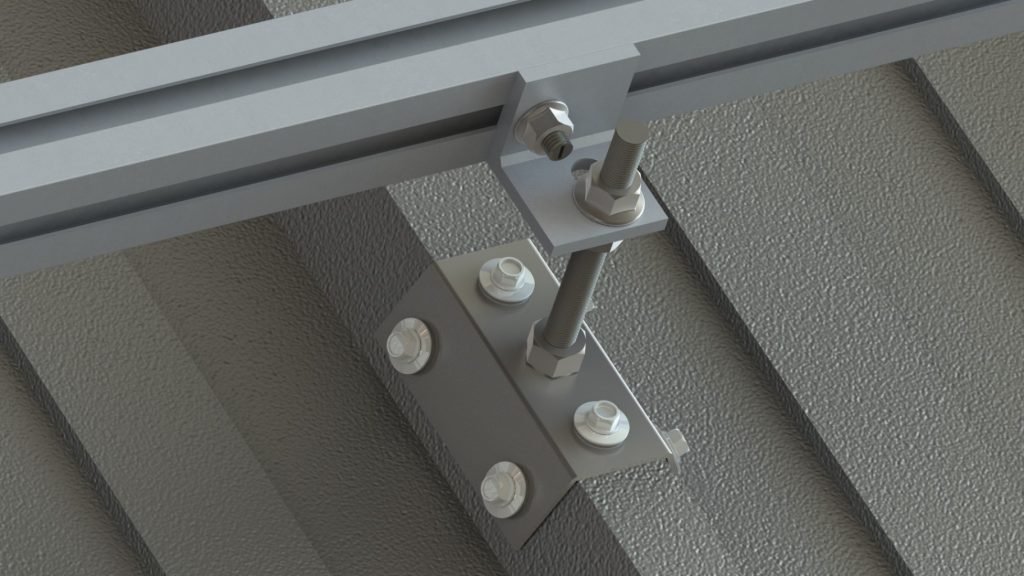
If the roof profile or support construction is unknown, the attachment cannot be fully qualified from the description “trapezoidal metal roof” alone.
8. Questions to Ask a Solar Mounting Supplier
When reviewing a proposed attachment, ask the supplier:
Which roof profile, sheet material and thickness were used for the test?
Is the attachment sheet-only, or is it fastened into a purlin or other structural support?
What fastener and washer configuration was tested?
What was the governing failure mode?
Does the report cover the required load direction and installation arrangement?
How should the reported test result be interpreted for project design?
Are there limitations on profile geometry, support spacing or installation?
Is the proposed project configuration within the documented scope?
If these questions cannot be answered from the available documentation, the correct next step is to obtain the missing information or request a suitable engineering assessment—not to assume that a similar-looking roof is equivalent.
FAQ
Is pull-out the same as pull-through?
No. Pull-out concerns the fastener losing its anchorage in the material holding it. Pull-through concerns the sheet failing around the fastener head or washer. They involve different parts of the connection.
Can a stronger screw prevent pull-through?
Not necessarily. If the roof sheet fails around the fastener head or washer, increasing the screw’s tensile strength may not address the governing failure mode. The sheet, fastener geometry, support condition and load path must be assessed together.
Does a thicker roof sheet always have higher pull-through resistance?
Sheet thickness is an important variable, but it does not determine capacity by itself. Material properties, profile geometry, fastener and washer dimensions, support conditions and loading also matter.
Does a pull-out test prove that a solar roof attachment is suitable?
No. A pull-out test addresses a particular failure mechanism under a defined test configuration. It does not automatically establish pull-through resistance, complete attachment capacity or suitability for every project.
Can one test result be used for every trapezoidal roof profile?
No. Different profiles, materials, thicknesses, fixing positions and support arrangements can produce different behavior. The applicability of a test must be established before using its result.
Conclusion
Pull-out and pull-through describe different ways a fastened trapezoidal roof connection can fail. Reliable attachment selection requires more than checking the screw specification or the bracket’s appearance.
The roof profile, sheet properties, fastener and washer, supporting structure, load direction and test configuration all matter. The governing failure mode must be identified, and any test result must be interpreted within its documented scope.
For a project-specific assessment, start with the actual roof profile and supporting construction, then match the proposed attachment and available evidence to the project requirements.
Technical references
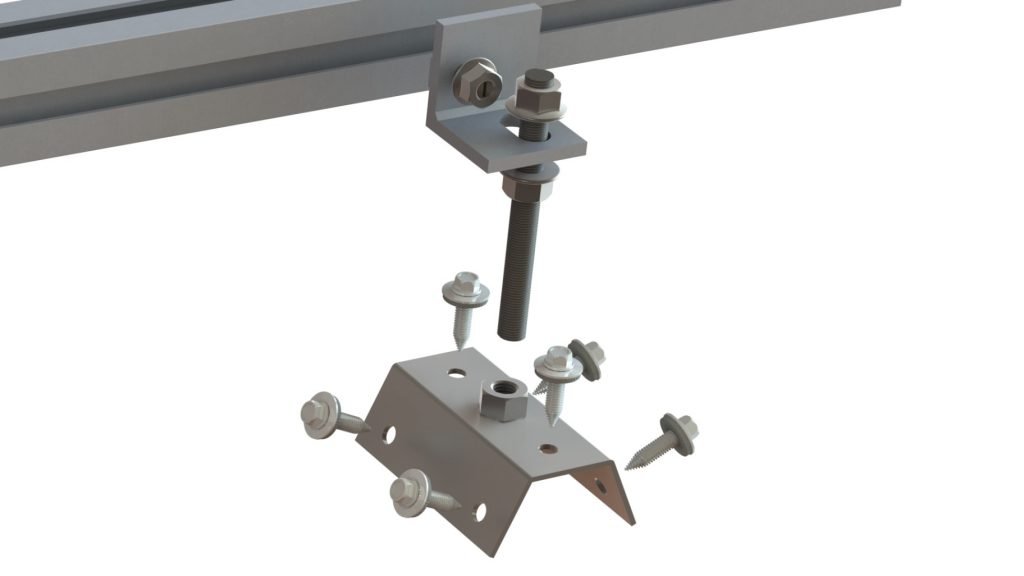
Need to assess a trapezoidal roof attachment?
Share the roof profile, sheet thickness, supporting-member details, proposed fastener configuration and project load requirements. These details help establish whether available test evidence is relevant to your application.