
The required embedment of a solar hanger bolt into timber depends on the mounting system, the timber member and the connection design. There is no single embedment depth that is suitable for every timber roof.
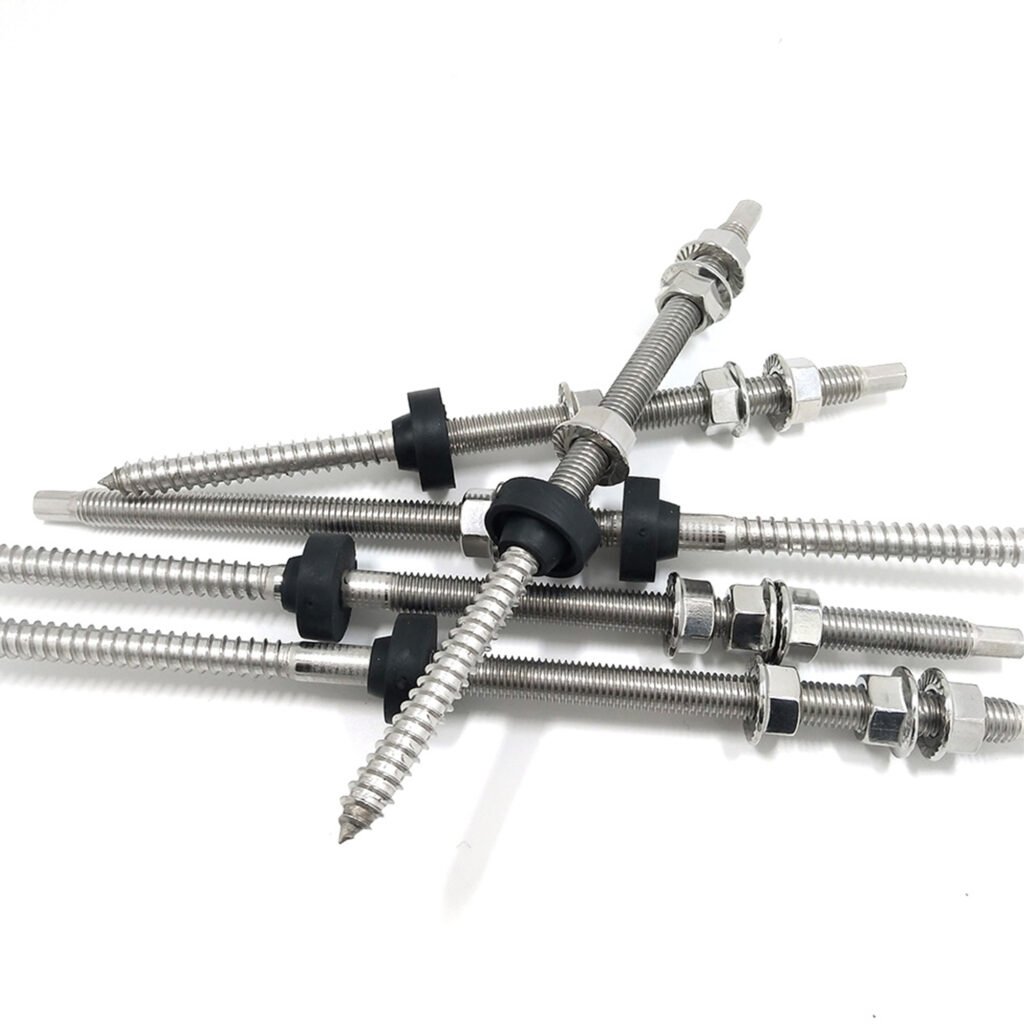
A hanger bolt may pass through a metal roof sheet, a cavity and a bracket or adapter before reaching the structural timber. Its overall length therefore does not tell you how much thread actually engages the timber.
The first task is to establish the effective embedment in the structural timber. The next is to verify that the specified embedment, fastener geometry, timber properties and installation method are appropriate for the intended loads.
A longer hanger bolt is not automatically a stronger connection. If the extra length is used to pass through roof layers or a larger cavity, it may not increase the effective timber embedment at all.
1. What does timber embedment mean?
For a solar hanger bolt installed into a timber rafter or purlin, embedment refers to the relevant threaded portion engaging the structural timber, as defined by the applicable product instructions and connection design.
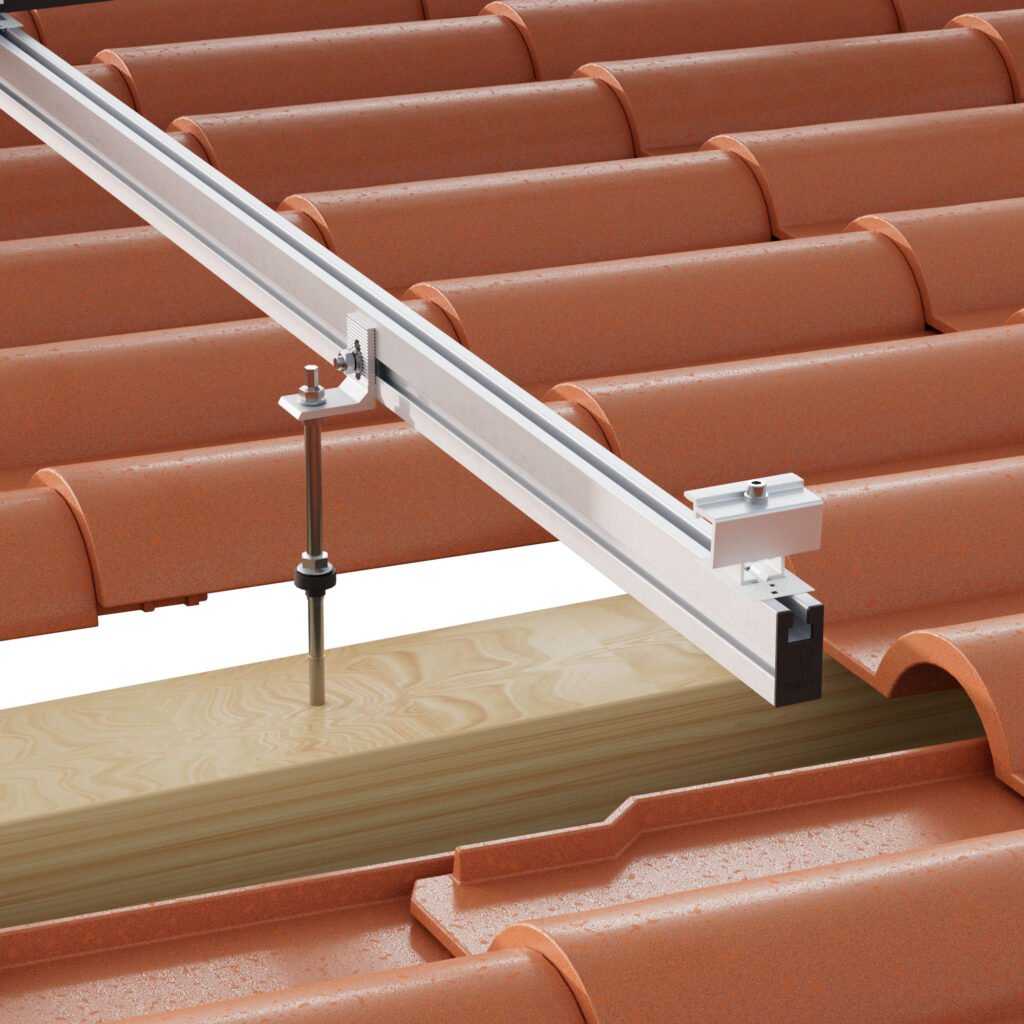
It should be distinguished from three other dimensions:
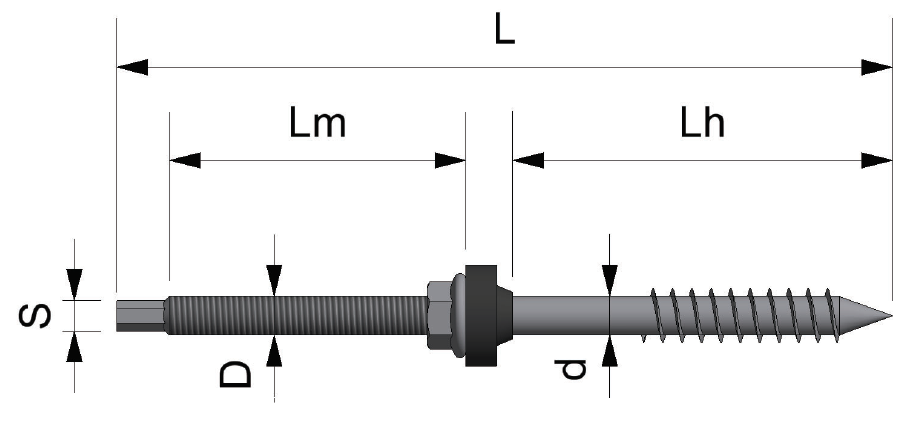
Overall bolt length: The total length of the hanger bolt.
Roof penetration length: The portion passing through the roof covering and other layers before entering the timber.
Effective timber embedment: The length of fastener engagement within the structural timber that is relevant to the specified connection.
These dimensions are related, but they are not interchangeable.
Consider a hanger bolt passing through a profiled metal roof sheet, a cavity and a mounting adapter before reaching a timber purlin. Increasing the roof-sheet-to-purlin distance may require a longer bolt. It does not, by itself, establish a greater effective embedment or a higher withdrawal resistance.
The required embedment must be determined from the applicable installation instructions and, where structural capacity is being assessed, the relevant connection design or test evidence.
2. What determines the required embedment?
2.1 The mounting-system specification
Start with the installation manual for the exact hanger bolt and mounting system.
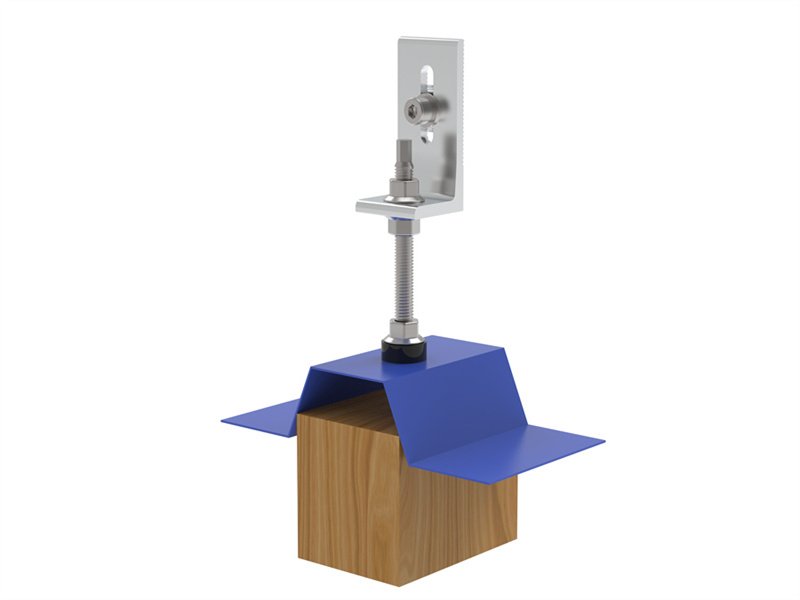
The manufacturer may specify:
Minimum engagement into the timber.
Pilot-hole diameter and drilling depth.
Permitted timber applications.
Required installation method and alignment.
Positioning of the sealing components.
Restrictions on the roof construction or structural member.
These instructions must be interpreted as a complete installation procedure. A minimum embedment value should not be separated from the product, timber application and other requirements for which it was specified.
For example, Clenergy’s PV-ezRack Ascent Wings hanger-bolt guide for fibre-cement roofing with wood purlins specifies a 9.2 mm pilot hole for the documented M12 hanger bolt and instructs the installer to embed 70 mm of the threaded portion into the wood.
That 70 mm dimension belongs to the documented Clenergy product and application. It is not a universal requirement for solar hanger bolts.
Reference: Clenergy PV-ezRack Ascent Wings Hanger Bolt Installation Guide
2.2 Timber properties
The connection depends on the timber as well as the metal fastener.
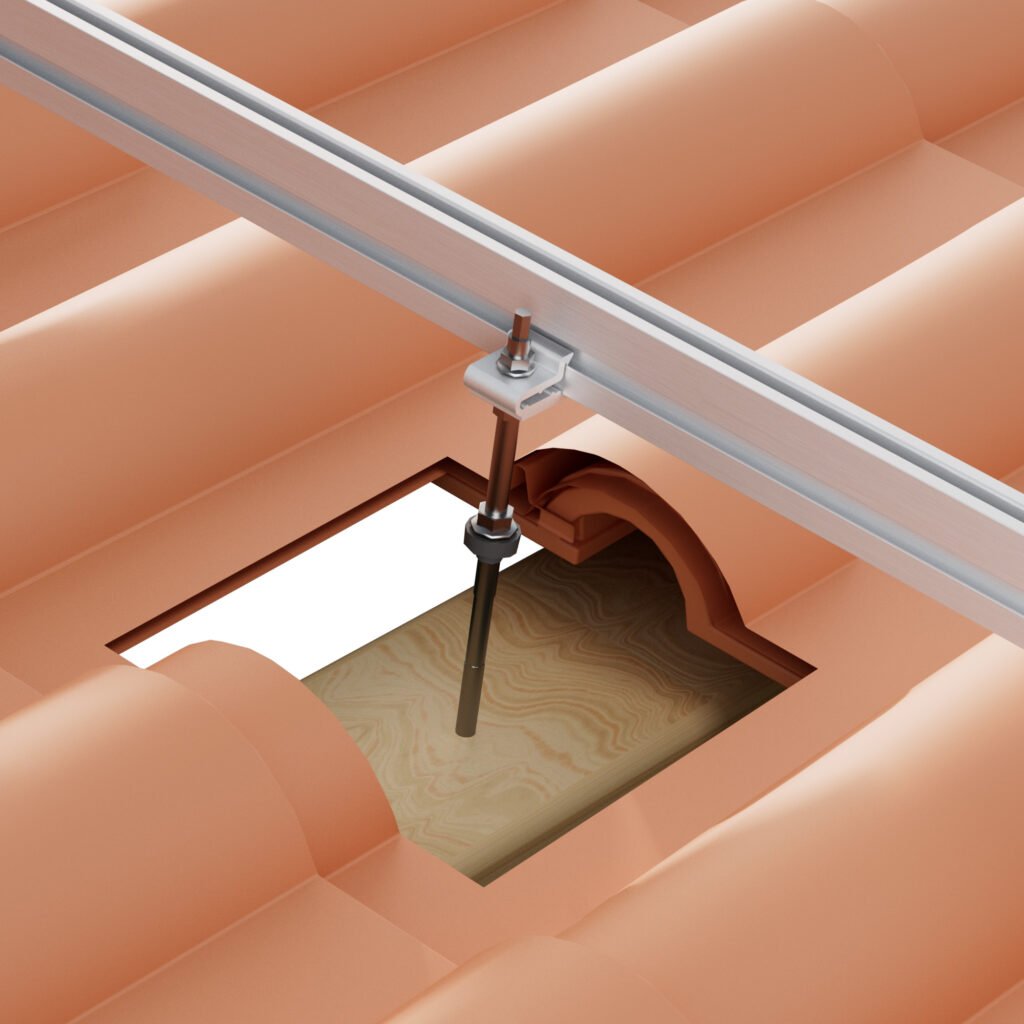
Relevant information can include:
Timber species or the specified timber material properties.
Timber grade and density, where required by the applicable design method.
Whether the member is solid timber or an engineered timber product.
Timber condition and moisture-related design considerations.
The actual member dimensions and the location of the proposed fastener.
The same nominal hanger-bolt diameter and embedment should not automatically be assigned the same withdrawal resistance in different timber substrates.
Where the timber type or properties are unknown, the connection capacity cannot be established reliably from the bolt dimensions alone. The project designer or responsible mounting-system supplier should identify the assumptions required for the assessment.
2.3 Fastener geometry
The threaded portion that engages the timber, the thread geometry, the fastener diameter and the installation method all matter.
The relevant design dimension may not be the same as the total threaded length shown in a product drawing. For example, a hanger bolt can have different thread forms at its timber-engagement end and its metric-thread end for the bracket connection.
Do not assume that the full threaded length contributes equally to the timber connection. Use the dimensions and definitions in the applicable product instructions and design method.
2.4 Timber member width and edge distance
A hanger bolt must engage the intended structural member without violating applicable placement restrictions.
Check:
The actual timber width and depth.
The distance from the bolt axis to the timber edges.
The distance to the end of the member, where relevant.
The proposed bolt position relative to the roof layout.
The presence of splits, damage or other conditions that may affect the connection.
Increasing embedment does not solve every placement problem. If the member is too narrow or the bolt is too close to an edge, the connection may remain unsuitable even when the nominal embedment is increased.
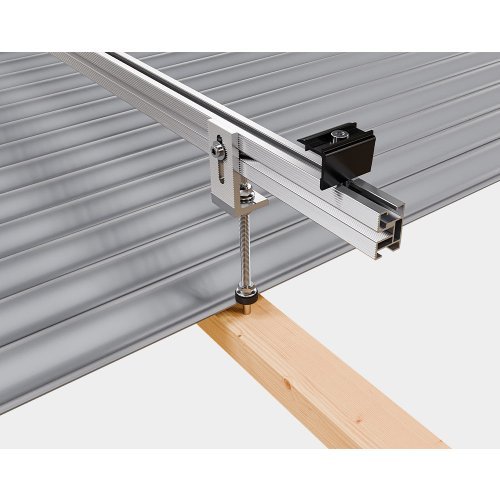
The required edge distances and member dimensions should follow the applicable product instructions and structural design requirements rather than a generic rule.
3. How roof construction affects available embedment
Roof construction is one of the main reasons the required hanger-bolt length varies between projects.
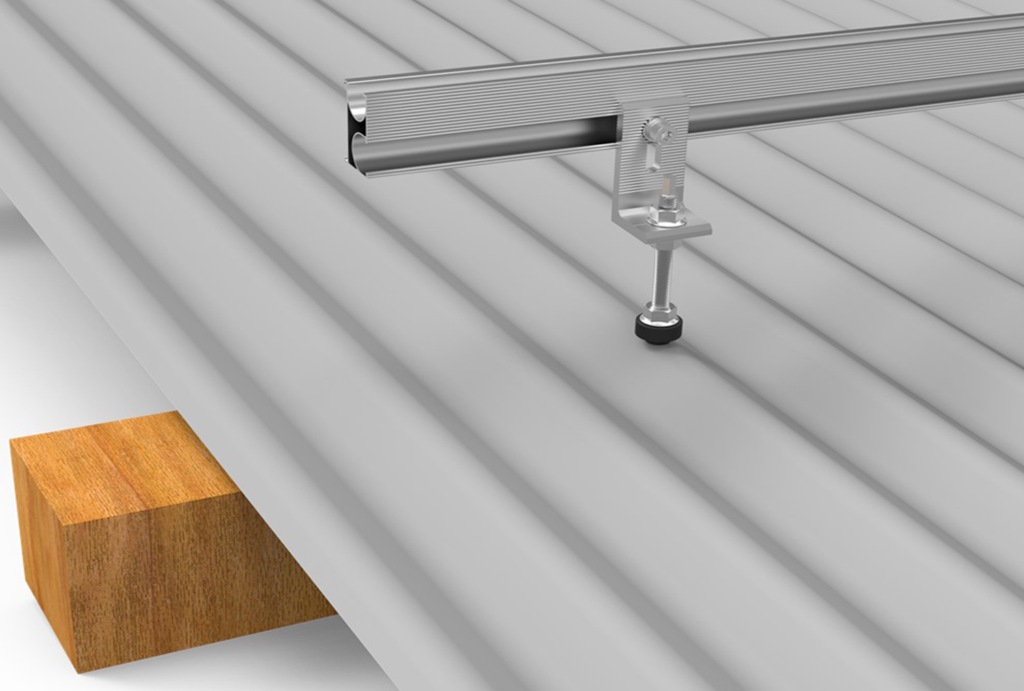
A typical penetrative roof connection may include:
The roof covering.
A cavity or separation between the covering and structural timber.
The timber rafter or purlin.
The hanger bolt and its sealing components.
The bracket or adapter connecting to the mounting rail.
The bolt must be long enough for the complete arrangement while still achieving the specified timber engagement and sealing geometry.
The correct selection therefore requires two separate checks:
Geometry check: Does the bolt have the correct overall length for the roof layers, cavity, bracket and required engagement?
Connection check: Is the resulting timber embedment and fastener arrangement suitable for the intended structural loads?
Passing the first check does not prove the second.
For example, a roof with a deeper cavity may need a longer bolt than a roof with a shallow cavity. That does not mean the deeper-cavity connection needs a greater embedment into the timber. The required embedment is determined by the applicable system and structural design; the additional bolt length may simply accommodate the different roof geometry.
4. Does greater embedment always provide greater capacity?
Not as a universal rule.
Effective embedment is an important variable in timber withdrawal resistance, but installed connection performance depends on more than one dimension.
The assessment may also need to consider:
Fastener type and geometry.
Timber properties.
Pilot-hole diameter and installation method.
Member width and edge distances.
Load direction and the combination of loads.
The bracket, rail and other parts of the connected assembly.
An increase in embedment should not be translated directly into a proportional increase in capacity unless the applicable design method or representative test evidence supports that conclusion.
The connection must also be checked for relevant failure modes. Depending on the configuration, the governing limit may involve the fastener, timber, bracket or another part of the load path.
The American Wood Council’s connection-design resources distinguish withdrawal capacity from lateral-load capacity and provide calculation methods for specified wood connections. Such a framework helps explain why connection performance depends on the defined fastener and substrate conditions. It does not, by itself, certify a particular solar hanger bolt or mounting assembly.
5. Pilot holes and installation quality
The specified embedment is meaningful only when the fastener is installed using the required method.
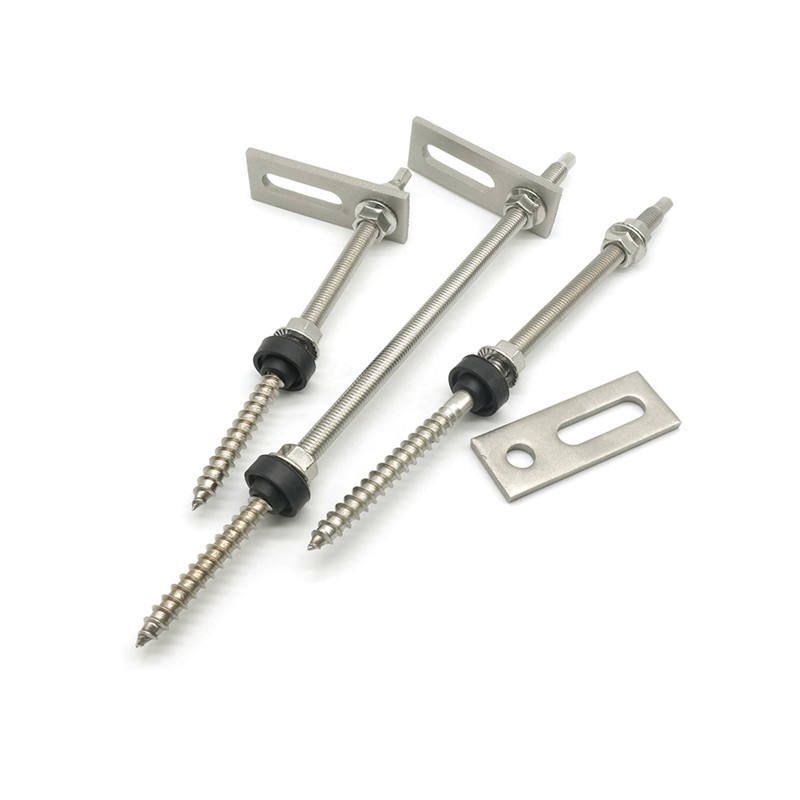
Pilot-hole diameter
The pilot-hole diameter must follow the instructions for the particular fastener and timber application. Do not select it from the nominal bolt diameter alone.
An unsuitable pilot hole may affect installation, thread engagement and the resulting connection. The required diameter can differ between products and applications.
Drilling depth
Confirm that the pilot hole reaches the specified depth in the structural timber. The required drilling depth and the final embedment are related but are not necessarily identical.
The installer should follow the manufacturer’s procedure for the relevant fastener rather than assume that the drilling depth can be chosen independently.
Alignment
The hanger bolt should be installed in the orientation required by the mounting-system instructions. Where perpendicular installation is specified, an angled installation should not be treated as equivalent without approval.
Misalignment can affect the bracket interface and may introduce forces not represented by a simple axial withdrawal assessment.
Installation method
Use the installation method and tools specified for the product. An improvised driving method can damage threads or compromise installation quality.
If a bolt is visibly damaged, installed incorrectly or does not engage the intended timber member, do not treat it as acceptable merely because the roof penetration can be sealed.
6. Embedment, uplift and the complete load path
A solar hanger bolt is part of a connection system, not an isolated fastener.
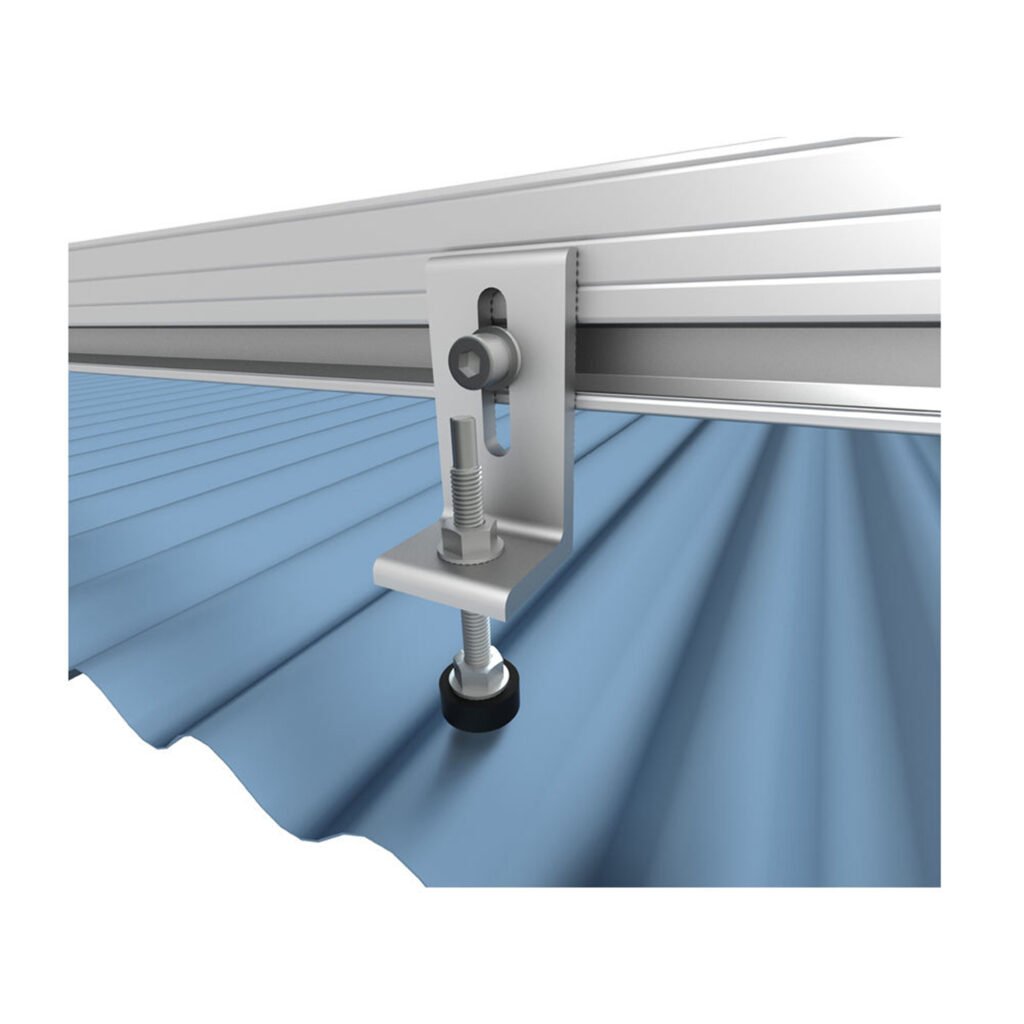
A typical load path is:
PV module → module clamp → rail → L-foot or adapter → hanger bolt → timber rafter or purlin → building structure
Wind uplift may place the timber connection under withdrawal loading, while other load directions or combinations may introduce lateral forces and additional demands on the bracket or fastener.
The connection should therefore be assessed for the relevant load directions and the complete load path. A timber embedment value alone does not establish the design resistance of the installed mounting system.
In particular:
A bolt’s material tensile strength is not the same as its installed withdrawal capacity.
A published withdrawal result is incomplete if the substrate and test configuration are not identified.
A product-specific installation requirement is not automatically a project-specific structural calculation.
A calculation or test for one timber condition should not automatically be transferred to a different timber member or installation arrangement.
Where project loads are high, the roof construction is unusual, or the mounting system falls outside the manufacturer’s documented conditions, obtain the necessary engineering assessment before installation.
7. A practical method for checking timber embedment
Use this sequence when selecting or reviewing a hanger bolt.
Step 1 — Identify the structural timber
Confirm whether the fastener enters a timber rafter, purlin or another structural member. Establish its dimensions and the timber properties needed for the applicable design method.
Do not assume that the visible roof sheet is the structural substrate.
Step 2 — Measure the roof assembly
Record the thickness of the roof covering, the distance to the timber, any cavity and the geometry of the bracket or adapter.
Use these dimensions to establish the overall bolt length required by the proposed installation.
Step 3 — Find the required embedment
Consult the current installation instructions for the exact hanger bolt and mounting system.
Identify the specified timber engagement, pilot-hole diameter, drilling depth, edge-distance requirements and installation method.
If the instructions do not cover the proposed configuration, request written clarification or an engineering assessment.
Step 4 — Check the timber geometry
Verify that the proposed bolt position meets the applicable member-width, edge-distance and end-distance requirements.
Confirm that the bolt will engage the intended structural timber rather than stop in the roof covering or enter an unintended part of the assembly.
Step 5 — Check structural suitability
Establish whether the specified connection has appropriate supporting design or test evidence for the actual substrate and installation configuration.
Where required, the assessment should consider the intended loads, fastener, timber, embedment and relevant failure modes.
Step 6 — Check the roof seal separately
The bolt penetration must also be sealed according to the applicable roof and mounting-system instructions.
The sealing arrangement depends on the roof covering, penetration geometry, seal position and specified installation procedure. Correct timber embedment does not automatically establish waterproofing performance.
8. Information to provide when requesting a hanger-bolt solution
A useful technical inquiry should include more than the bolt diameter and overall length.
Roof and substrate
Roof-covering material and profile.
Timber rafter or purlin dimensions.
Timber type or specified material properties, where available.
Distance between the roof covering and structural timber.
Roof assembly drawing or clear installation photographs.
Hanger bolt and bracket
Required overall bolt length.
Required timber embedment, if already specified.
Bolt diameter and thread details.
Bracket or adapter dimensions.
Pilot-hole and installation requirements.
Project qualification
Applicable design loads or engineering requirements.
Available installation manuals and test or calculation documents.
Relevant roof-sealing requirements.
Any unusual conditions, such as limited timber width or restricted bolt locations.
For OEM/ODM or custom-length inquiries, these details help the supplier identify the correct geometry and the evidence needed to assess the connection. A drawing can establish whether the bolt fits the assembly, but it cannot by itself establish structural capacity.
Frequently asked questions
How much timber embedment does a solar hanger bolt need?
There is no universal value. Use the installation instructions for the exact product and timber application, and verify the structural connection where required.
Is a longer hanger bolt stronger?
Not necessarily. A longer bolt may simply accommodate a thicker roof assembly or a larger cavity. Structural performance depends on effective timber embedment, substrate properties, fastener geometry, installation and the complete connection.
Is total bolt length the same as timber embedment?
No. Total length includes the portions needed to pass through the roof assembly and connect to the bracket or adapter. Only the relevant engagement within the structural timber counts as timber embedment under the applicable definition.
Can I use the same embedment depth for all timber purlins?
Do not assume so. Timber properties, member geometry, fastener details and mounting-system requirements can differ. The applicable design method and product documentation determine what is acceptable.
Can I increase embedment to compensate for a small timber member?
Not automatically. Timber width and edge distances may limit the connection, and greater embedment does not remove every potential failure mode. The complete connection must be reviewed.
Does a published pull-out value prove that the hanger bolt is suitable?
Only if the evidence is applicable to the actual configuration and is interpreted within its stated scope. Substrate, embedment, installation method, load direction and failure mode all matter.
Conclusion
Selecting a solar hanger bolt for a timber roof requires two distinct decisions: the overall length needed to suit the roof assembly, and the effective embedment required for the structural connection.
Confirm the actual timber member, follow the product-specific installation instructions, check the pilot hole and member geometry, and verify structural suitability for the intended loads.
Do not select embedment from overall bolt length alone, and do not treat a product-specific dimension as a universal timber-connection rule.
Need help specifying a hanger bolt for a timber roof?
Share the roof build-up, timber dimensions, required embedment and bracket drawing for a configuration review.