
Solar Hanger Bolt: Engineering Guide to Roof Attachment, Embedment, Waterproofing and Load
A solar hanger bolt is a penetrating roof attachment used to connect a PV mounting system to an underlying structural member such as a timber rafter or purlin, or to a suitable metal purlin configuration.
Although the hanger bolt itself is a relatively simple component, its installed performance depends on much more than bolt diameter or stainless-steel grade.
The relevant engineering question is:
Can the complete hanger-bolt connection transfer the required project loads into the actual supporting structure while maintaining the required roof weather seal?
That requires checking the roof covering, substrate, bolt geometry, effective embedment or thread engagement, installation position, attached bracket or rail, and waterproofing detail as one connected system.
A useful qualification sequence is:
Roof identification → Substrate identification → Geometry → Installation → Load qualification → Waterproofing → Project design
1. What Is a Solar Hanger Bolt?
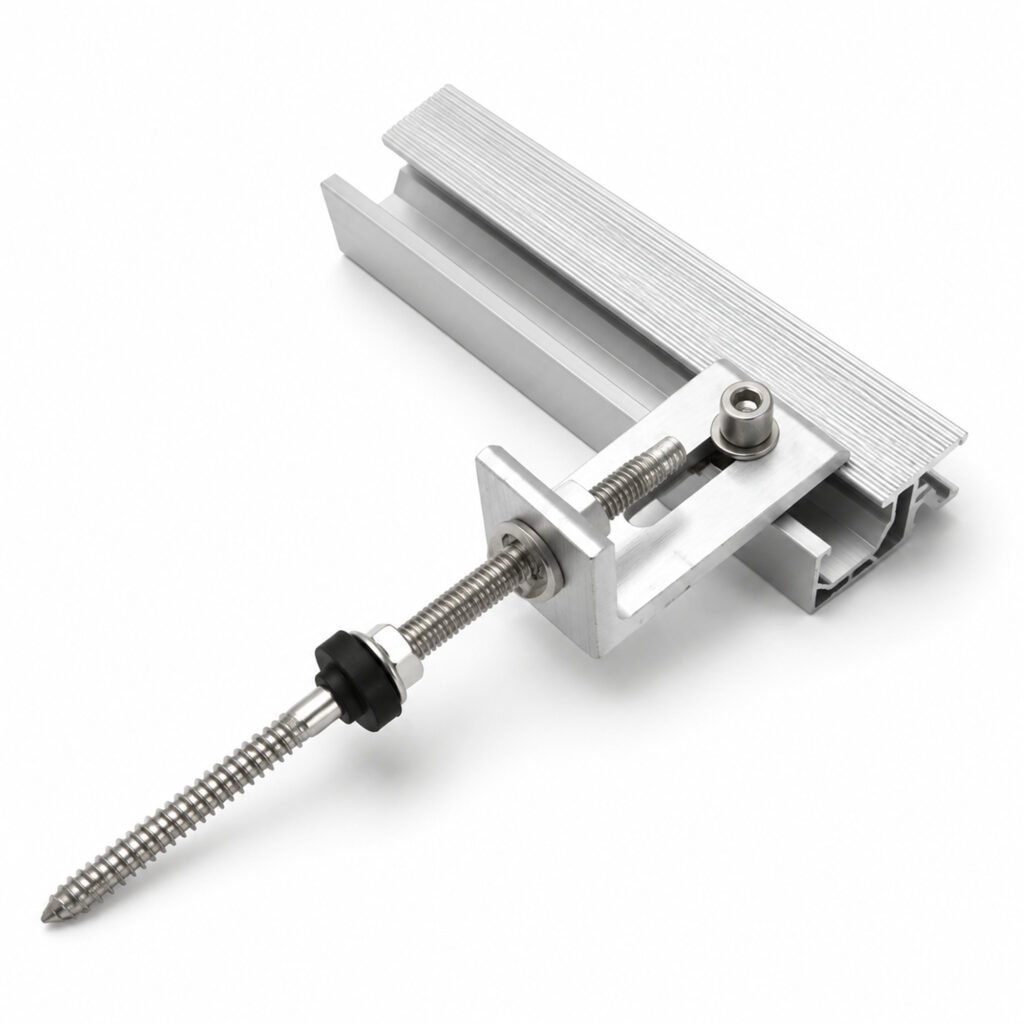
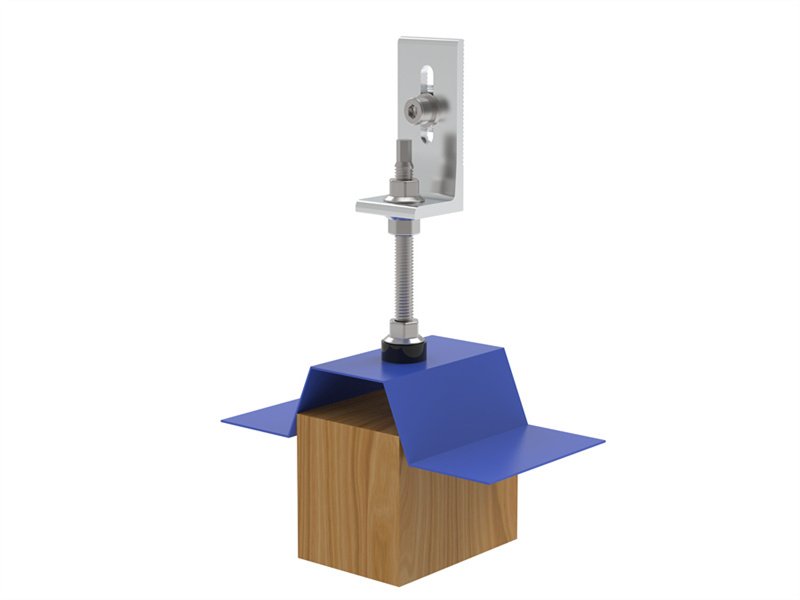
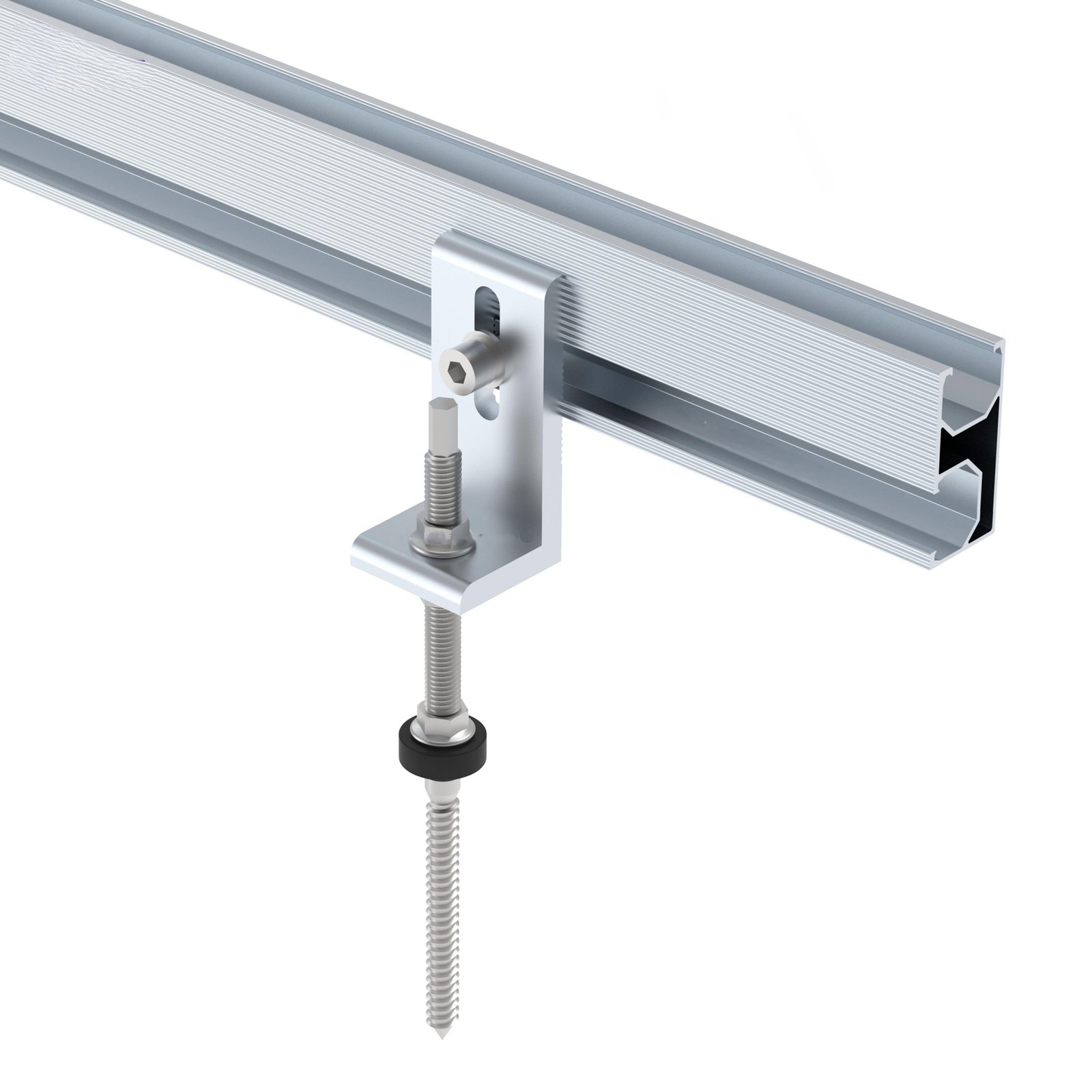
A solar hanger bolt typically has two functional thread regions:
- a thread intended to engage the supporting structure;
- a metric-threaded section used to connect the mounting bracket, adapter or rail system.
The typical structural load path is:
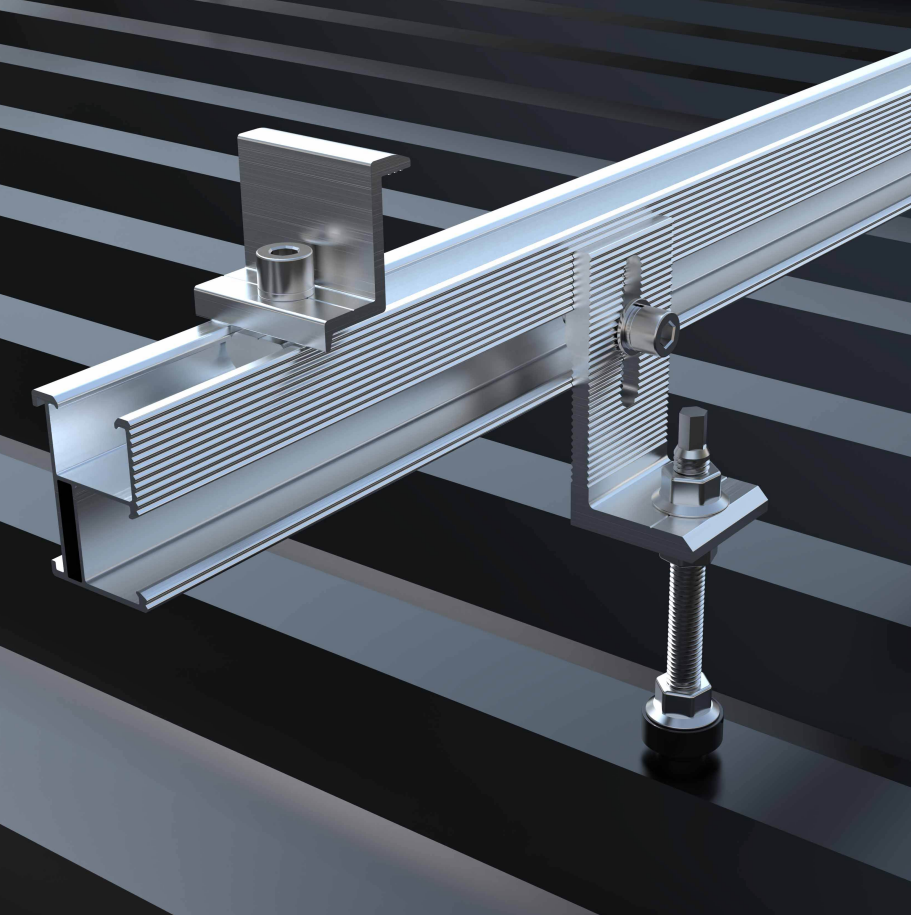
PV module → clamp → rail → L foot / adapter → hanger bolt → rafter or purlin → roof structure
The hanger bolt is therefore an attachment component within a larger mounting system. Its capacity cannot be evaluated independently from the supporting substrate and the components attached to it.
For example, the bolt itself may have high material strength while the installed connection is governed by:
- timber withdrawal;
- insufficient embedment;
- steel-purlin connection behavior;
- thread engagement;
- edge distance;
- bracket geometry;
- roof-covering interaction;
- or another component in the load path.
This is why a nominal M8, M10 or M12 designation is not, by itself, an engineering capacity specification.
2. Why the Roof and Substrate Must Be Identified First
The first question when selecting a hanger bolt should not be:
“Should I use M10 or M12?”
It should be:
“What is the hanger bolt actually connecting to?”
Different roof constructions create fundamentally different connection problems.
Relevant information includes:
- roof covering;
- roof profile;
- roof thickness;
- roof pitch;
- supporting member type;
- timber rafter or purlin dimensions;
- steel purlin thickness and geometry;
- member spacing;
- location of the supporting member;
- required penetration;
- mounting-system geometry.
The two major branches are commonly:
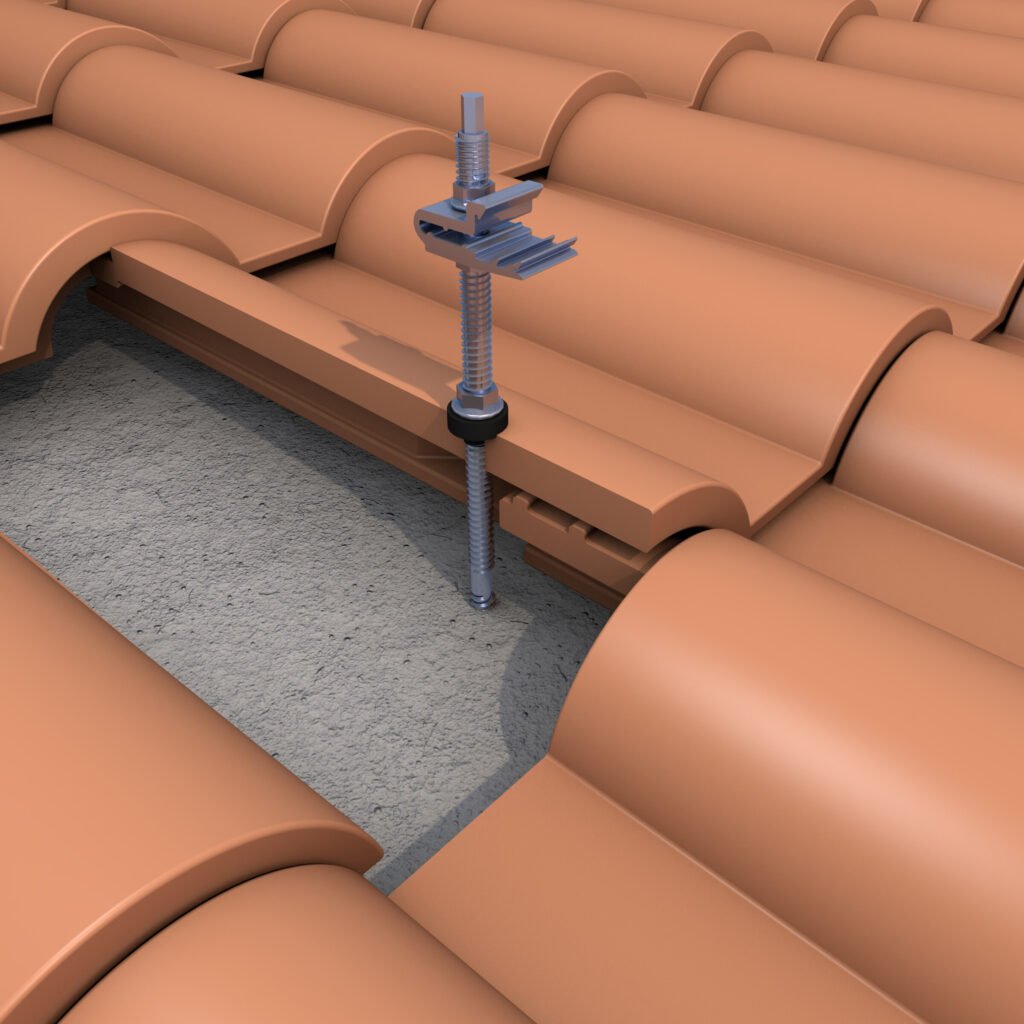
Timber-supported installation
The hanger bolt engages a timber structural member.
Important variables include:
- timber member dimensions;
- effective embedment;
- pilot-hole requirements;
- edge distance;
- wood properties;
- installation position;
- roof-covering thickness.
Steel-purlin installation
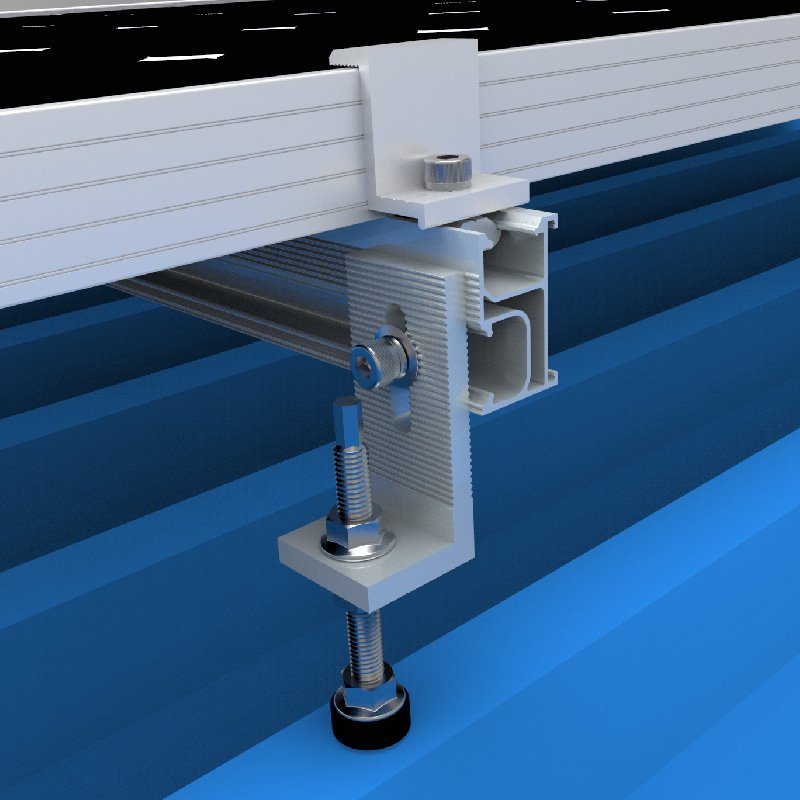
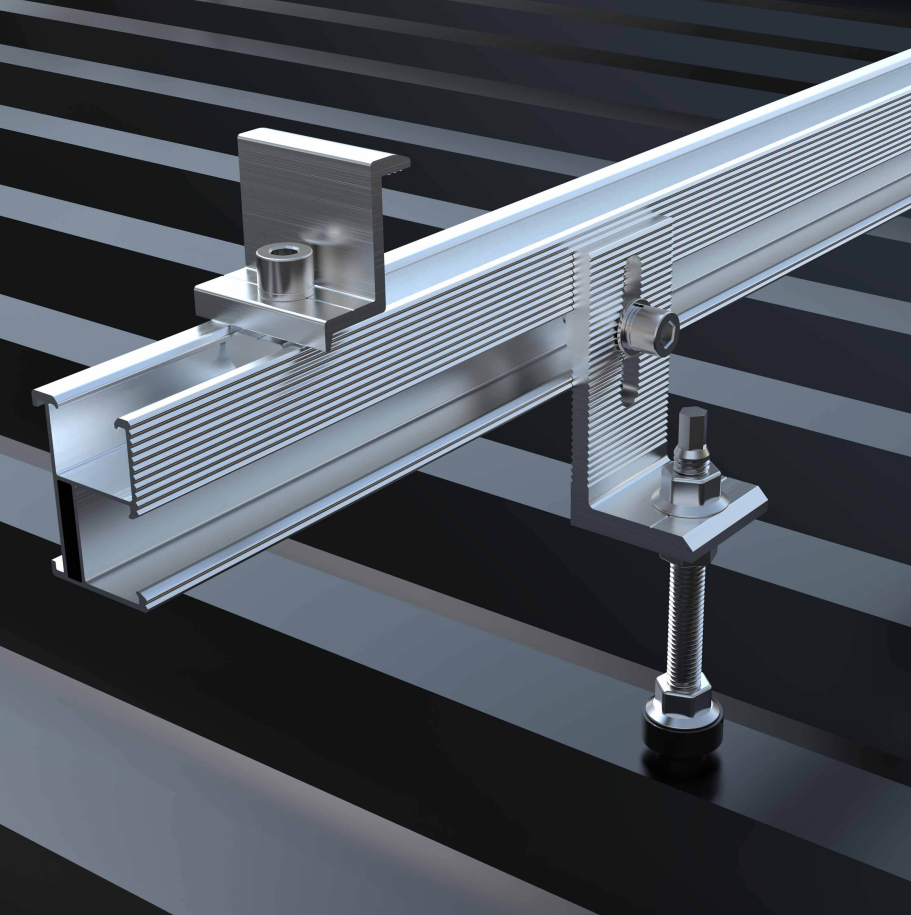
The hanger bolt interacts with a steel purlin or other defined metal substrate. Important variables include:
- steel thickness;
- flange geometry;
- drilling requirements;
- thread engagement;
- installation angle;
- connection configuration.
These should not be treated as interchangeable installation methods.
3. Hanger Bolt Load Path
A simplified load path is:
Module–Module clamp–Mounting rail–L foot / adapter–Hanger bolt–Timber rafter / steel purlin–Supporting roof structure
Each interface can influence the final result. A hanger bolt that is adequate at the bolt-to-substrate interface does not automatically mean that:
- the rail is adequate;
- the L foot is adequate;
- the bracket connection is adequate;
- the roof member is adequate;
- or the complete PV system is adequately designed.
The governing failure can occur anywhere along the load path. This is particularly important for wind uplift, where the attachment may experience significant withdrawal forces.
Lateral or shear loading is a different design problem and should not simply be assumed to have the same resistance as uplift.
4. What Determines Hanger-Bolt Capacity?
There is no universal hanger-bolt capacity independent of the substrate and installation configuration.
The relevant variables include:
Bolt geometry
- nominal diameter;
- thread geometry;
- total length;
- structural-thread length;
- metric-thread length;
- bracket interface.
Supporting substrate
- timber or steel;
- member dimensions;
- material properties;
- steel thickness where applicable;
- member geometry.
Effective embedment or thread engagement
The structural portion of the bolt must engage the intended supporting member.
Total bolt length is not the same as effective structural embedment.
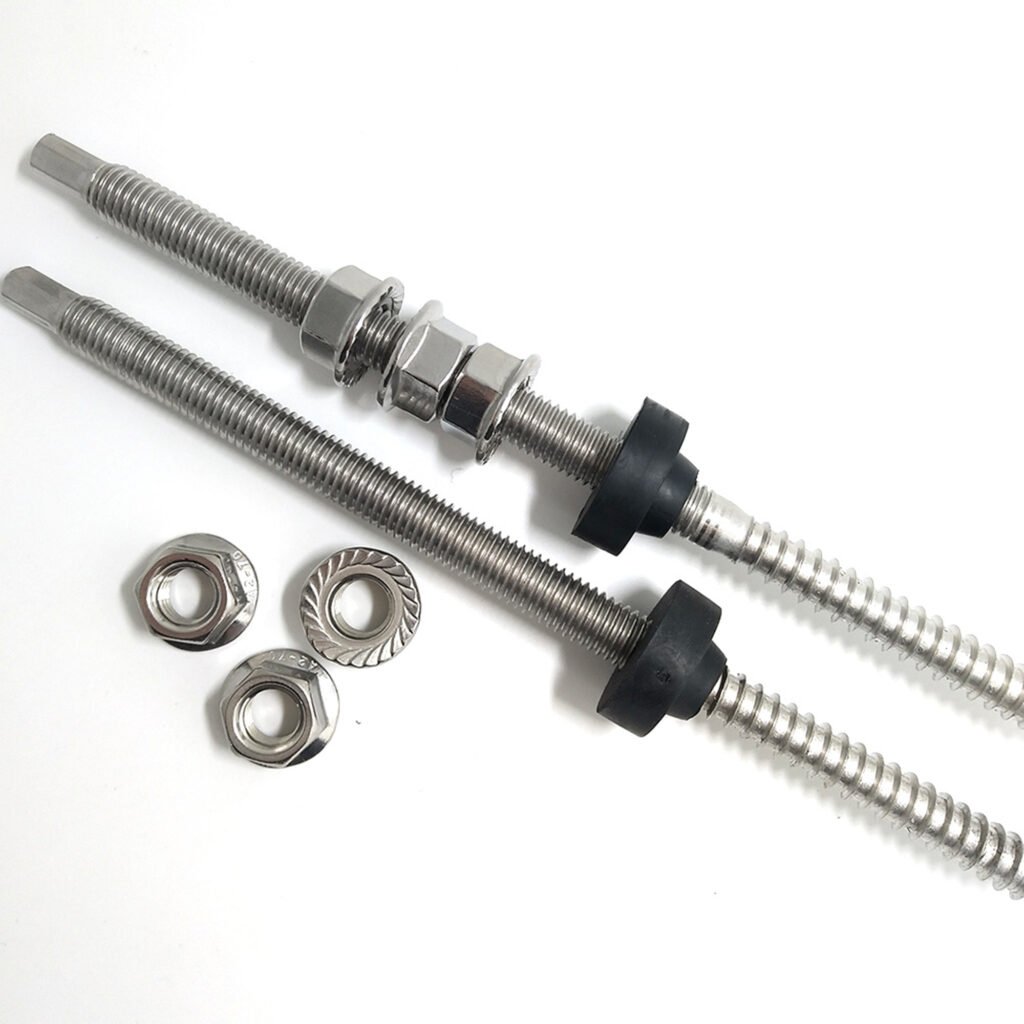
Part of the bolt may pass through:
- roof covering;
- cavity;
- bracket;
- washers;
- sealing components;
- or other non-structural layers.
Those dimensions do not automatically contribute to structural resistance.
Installation geometry
The connection can also be affected by:
- pilot-hole diameter;
- installation angle;
- edge distance;
- member position;
- bracket geometry;
- eccentricity.
Applied load
Project loads should be defined rather than assumed.
Depending on the project, these may include:
- wind uplift;
- lateral/shear loading;
- snow effects;
- other applicable design actions.
The governing failure mode must then be identified.
5. Why Effective Embedment Matters
For a timber installation, the hanger bolt’s structural-thread engagement in the timber is a key connection variable.
A longer hanger bolt does not automatically provide greater structural capacity.
The useful structural dimension is the portion actually engaging the intended timber member.
The available embedment can be affected by:
- roof-covering thickness;
- cavity depth;
- timber member dimensions;
- bracket geometry;
- bolt length;
- installation position.
This creates an important distinction:
Total bolt length ≠ exposed length ≠ effective structural embedment
A specification that gives only the overall bolt length is therefore insufficient for engineering qualification.
The required embedment should be determined for the actual product, substrate and mounting-system configuration.
6. Timber Rafter or Purlin: What Needs to Be Checked?
For timber installations, the structural member must be positively identified.
The installer should verify:
- rafter/purlin location;
- member width;
- member depth;
- available edge distance;
- required embedment;
- pilot-hole requirements;
- installation position.
A narrow timber member can create several risks:
- insufficient edge distance;
- splitting;
- insufficient embedment;
- eccentric loading;
- inability to position the bolt correctly.
Therefore:
A hanger bolt that fits through the roof covering has not necessarily been installed into a structurally suitable member.
The roof covering can conceal the actual structural condition.
This is one reason photographs alone may not be enough for a project qualification.
A roof drawing, structural drawing, site measurement or other reliable substrate information may be required.
7. Steel Purlin Installation Is a Different Connection
Hanger-bolt installation into a steel purlin should not simply copy the timber installation procedure.
The connection depends on the steel member and its geometry.
Relevant variables include:
- steel thickness;
- flange geometry;
- hole diameter;
- thread engagement;
- bolt configuration;
- installation angle;
- sealing arrangement.
The evidence package includes manufacturer installation documentation that distinguishes timber and steel-purlin installation methods.
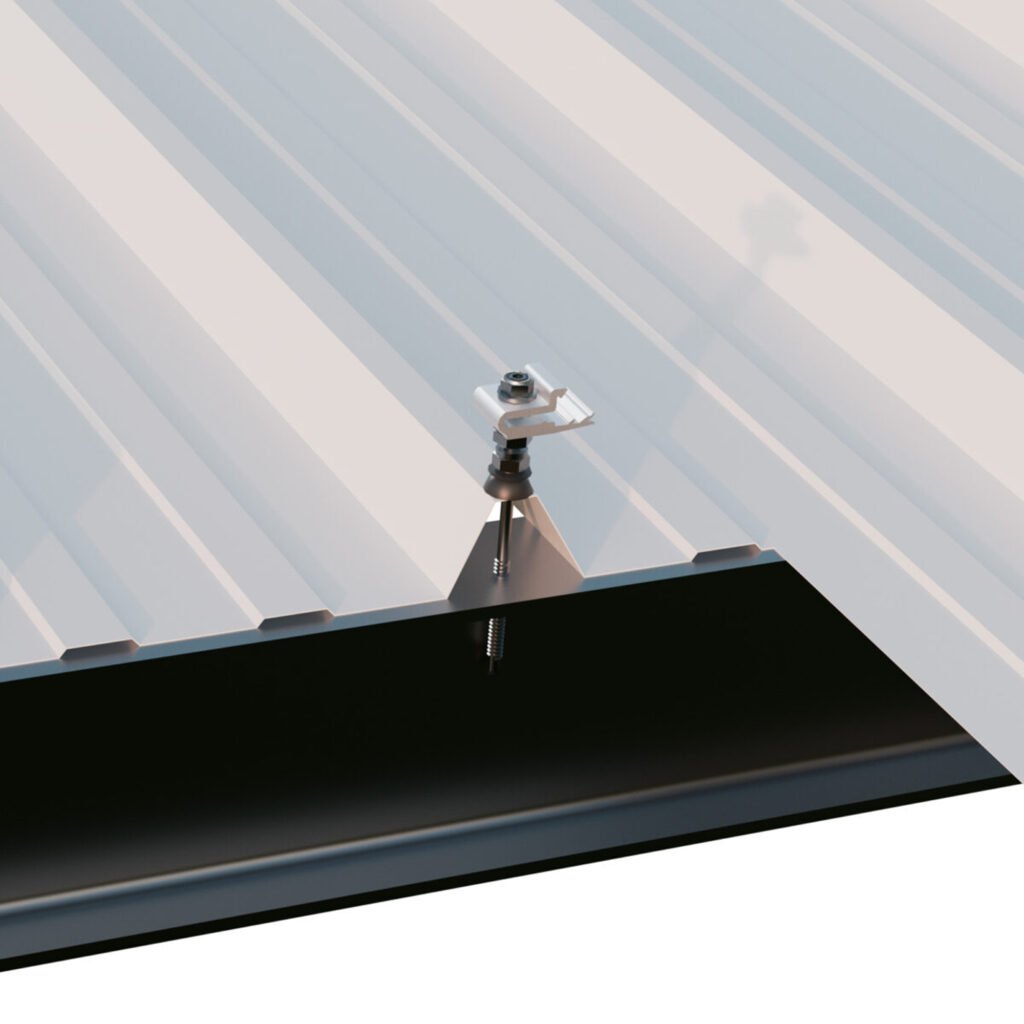
For example, documented systems specify different drilling requirements according to the substrate and may use different sealing details for metal roof profiles.
Therefore:
“Suitable for timber and steel” should be understood as two installation branches requiring separate qualification, not as one universal connection method.
8. Does a Larger Hanger Bolt Always Have Higher Capacity?
Not in a way that can be stated as a fixed rule for the complete PV system.
Increasing nominal bolt diameter changes the bolt geometry, but the installed connection may still be governed by another failure mode.
Possible governing locations include:
- bolt;
- threads;
- timber;
- steel purlin;
- roof sheet;
- bracket;
- rail connection.
Therefore, a statement such as:
“M12 is 20% stronger than M10”
would be misleading without defining exactly what is being compared.
Bolt material strength and installed connection resistance are different engineering quantities.
A product load statement also should not automatically be treated as project design resistance.
9. Pull-Out and Shear Are Different Design Problems
A hanger bolt used in a PV mounting system can experience different load directions.
For example:
Uplift / withdrawal
The load tends to pull the attachment out of the supporting member.
For timber, withdrawal resistance is strongly related to the fastener/substrate combination and effective embedment.
Lateral / shear
The load acts substantially perpendicular to the bolt axis.
This can introduce different stresses and failure mechanisms.
The design should therefore identify the actual load direction rather than using one generic “hanger bolt capacity.”
The appropriate engineering calculation or test should match the relevant substrate, geometry and loading condition.
10. What About Roof Waterproofing?
A hanger bolt creates a roof penetration.
That means the connection has two separate engineering functions:
- transfer structural load;
- maintain the required weather seal.
These functions are related through the installation but should not be treated as the same problem.
The waterproofing chain may involve:
Roof covering → penetration → seal geometry → EPDM → compression → flashing / sealing component → roof drainage
The exact arrangement depends on the roof system.
A common mistake is to assume:
“There is an EPDM washer, so the roof is waterproof.”
That is too broad.
An EPDM washer can contribute to sealing when correctly installed within the specified system, but sealing performance also depends on:
- hole size;
- washer/seal geometry;
- compression;
- roof profile;
- penetration location;
- installation quality;
- drainage;
- flashing or sealing components where required.
11. Is an EPDM Washer Enough?
Not necessarily.
For some roof constructions, an EPDM washer is part of the sealing system.
For other applications, dedicated flashing or sealing plates may be required.
The evidence package includes documented hanger-bolt systems for shingle-type roofs using dedicated metal flashing components, as well as systems for profiled metal roofs using specific sealing arrangements.
Therefore, the correct question is not:
“Does the bolt have an EPDM washer?”
It is:
“Is the complete penetration detail appropriate for this roof construction and installed according to the applicable system requirements?”
This distinction becomes particularly important for roofs where the penetration must pass through a weathering layer rather than a simple sheet-metal profile.
12. Can Over-Tightening Cause Waterproofing Problems?
Yes, depending on the sealing system.
The objective of tightening is to achieve the specified connection and seal condition.
More compression is not automatically better.
The evidence base specifically identifies over-compression as a potential problem for EPDM sealing.
Therefore, installation should follow the product/system instructions for:
- washer position;
- seal position;
- tightening sequence;
- compression;
- torque where specified.
A universal torque should not be invented for hanger bolts because tightening requirements are product/system specific.
13. Why Pilot-Hole Diameter Matters
For timber installation, pilot-hole diameter is part of the connection design and installation method.
It should not be selected using a universal value for every hanger bolt and timber condition.
The appropriate installation procedure can depend on:
- bolt geometry;
- thread design;
- timber properties;
- required embedment;
- product instructions.
For steel purlins, drilling requirements can depend on:
- steel thickness;
- flange geometry;
- thread/fastener design;
- specified installation method.
This is why the supplier’s installation documentation should be requested together with the hanger bolt rather than purchasing the bolt as an isolated commodity.
14. What If the Timber or Purlin Is Narrow?
This is a significant qualification issue.
A narrow supporting member can restrict:
- bolt position;
- edge distance;
- effective embedment;
- installation tolerance.
It can also alter the likely failure mode.
For timber, insufficient edge distance can increase splitting risk.
For a steel purlin, member geometry and flange dimensions may restrict where and how the connection can be made.
Therefore, the following information should be obtained before approving a hanger bolt for an unusual roof:
- member width;
- member thickness/depth;
- bolt location;
- edge distance;
- roof covering;
- required embedment;
- mounting-system geometry.
A bolt that is technically available in the required size may still be unsuitable for the actual roof.
15. How Does the Hanger Bolt Connect to the Rail?
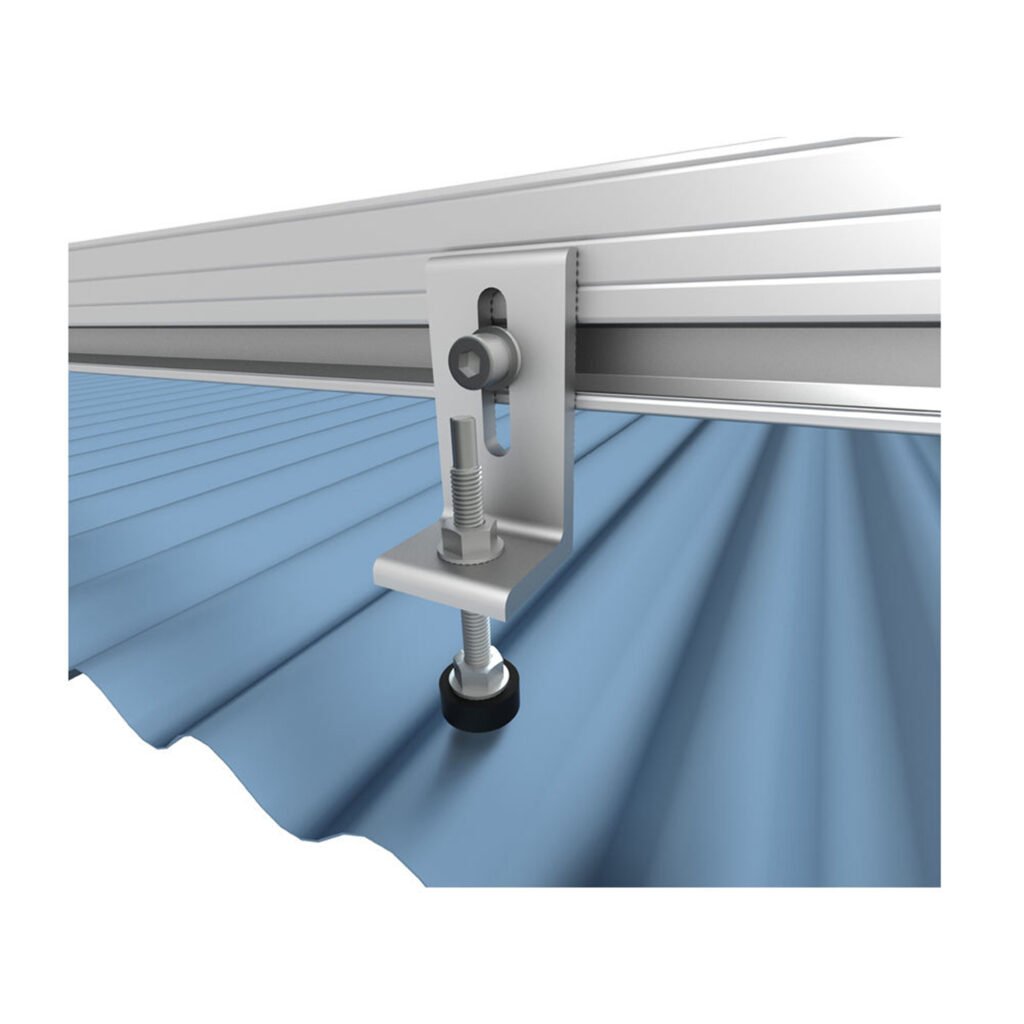
The hanger bolt normally connects to an L foot, adapter or similar mounting component through its metric-threaded portion.
The complete connection should therefore be checked as:
Hanger bolt → bracket/adapter → rail
rather than evaluating the hanger bolt alone.
Bracket geometry can introduce eccentricity or bending.
The rail connection can also affect how the hanger-bolt reaction is distributed.
In some mounting systems, adapter rails may be used where the mounting-system design requires load redistribution.
This does not mean that an adapter rail automatically increases capacity. Its effect must be established within the actual mounting-system design.
16. What Evidence Should Be Requested From a Supplier?
A serious hanger-bolt RFQ should request more than:
“M10 stainless-steel hanger bolts, 100 mm long.”
Useful documentation may include:
Product
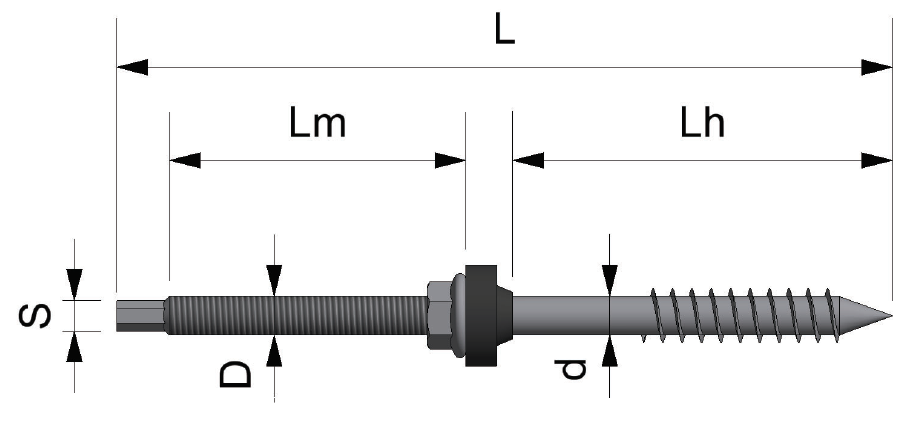
- dimensional drawing;
- bolt diameter;
- total length;
- structural-thread length;
- metric-thread length;
- stainless-steel grade;
- washer/seal specification;
- nut and hardware specification.
Roof/substrate
- approved roof types;
- timber/steel applications;
- applicable member dimensions;
- installation requirements.
Installation
- pilot-hole requirements;
- drilling requirements for steel;
- installation angle;
- embedment requirements;
- seal position;
- tightening procedure;
- waterproofing detail.
Engineering
Where available:
- test report;
- pull-out test;
- calculation;
- defined substrate;
- bolt geometry;
- effective embedment;
- loading direction;
- failure mode.
A pull-out value without the substrate and test configuration is incomplete engineering evidence.
17. What Does a Useful Hanger-Bolt Test Report Show?
A useful structural test should identify the configuration being tested.
Important information includes:
- roof construction;
- substrate type;
- substrate dimensions;
- bolt geometry;
- thread configuration;
- embedment;
- installation method;
- loading direction;
- test setup;
- failure mode;
- test result;
- applicable limitations.
This matters because a result obtained in one substrate condition should not automatically be generalized to another.
For example, a test performed in one timber condition does not by itself establish the installed capacity in every timber species, member size or embedment condition.
Likewise, a steel-purlin test does not automatically establish performance for every steel thickness and profile.
18. Does Stainless-Steel Grade Determine Suitability?
Material selection matters, but stainless-steel grade alone does not complete the engineering assessment.
Relevant considerations include:
- environmental exposure;
- stainless-steel grade;
- other metallic components;
- washer/bracket materials;
- roof material;
- surface condition;
- galvanic compatibility.
The evidence base specifically cautions against treating 304 stainless steel as universally suitable for every environment.
Similarly:
“Stainless steel” does not mean “corrosion-proof in every installation.”
The bolt, washer, bracket, rail and roof materials should be considered as an assembly.
19. What Information Should Be Included in an RFQ?
A technically useful hanger-bolt RFQ should identify the actual roof and substrate.
Roof
- roof type;
- roof covering;
- profile;
- sheet thickness where applicable;
- roof pitch;
- photographs;
- roof drawings.
Structural substrate
- timber rafter/purlin or steel purlin;
- member width;
- member depth/thickness;
- spacing;
- grade/species where known;
- structural drawings where available.
Hanger bolt
- M8/M10/M12 or custom size;
- total length;
- structural-thread length;
- metric-thread length;
- stainless-steel grade;
- EPDM/sealing components;
- nuts;
- custom thread requirements.
Mounting system
- L foot or adapter;
- rail model;
- rail section;
- rail span;
- module arrangement;
- attachment spacing.
Engineering
- project location;
- wind conditions;
- snow conditions where applicable;
- seismic requirements where applicable;
- roof zone;
- design code.
Procurement
- quantity;
- target market;
- finish;
- packaging;
- sample requirement;
- CAD requirement;
- testing/documentation requirement;
- OEM/custom requirements.
This information allows a supplier to determine whether the request is a simple dimensional quotation or requires an engineering qualification.
20. Common Hanger-Bolt Selection Mistakes
Mistake 1: Selecting by diameter only
M8/M10/M12 does not define the installed connection capacity.
Mistake 2: Selecting by total length only
Total length does not establish effective structural embedment.
Mistake 3: Assuming the roof sheet provides the structural connection
The hanger bolt must engage the intended structural member where the mounting system requires it.
Mistake 4: Using the same timber and steel installation method
Timber and steel purlin connections require different checks.
Mistake 5: Treating EPDM as a complete waterproofing system
Seal performance depends on geometry, compression, penetration and roof construction.
Mistake 6: Using one pull-out number for every substrate
Test results are configuration-specific.
Mistake 7: Assuming a larger diameter gives a fixed increase in system capacity
The governing failure mode may be in the substrate, bracket, rail or another part of the load path.
Mistake 8: Treating stainless-steel grade as the complete corrosion assessment
Environmental exposure and material pairing also matter.
Mistake 9: Ignoring edge distance
A narrow timber member can fundamentally change the connection condition.
Mistake 10: Quoting without identifying the substrate
A technically responsible supplier should know whether the connection is intended for timber, steel purlin or another defined substrate before making engineering claims.
21. Compatibility → Qualification → Project Design
Hanger-bolt selection should follow three separate stages.
Stage 1 — Compatibility
Can the hanger bolt physically be installed into the intended roof/substrate and connect to the mounting system?
Check:
- roof construction;
- substrate;
- member dimensions;
- bolt geometry;
- bracket/rail interface;
- waterproofing arrangement.
Stage 2 — Engineering Qualification
Can the complete connection support the defined loading?
Check:
- effective embedment;
- edge distance;
- substrate;
- bolt;
- bracket;
- rail;
- load direction;
- failure modes;
- applicable test/calculation evidence.
Stage 3 — Project Design
Is the qualified configuration suitable for the actual project?
Check:
- wind;
- snow;
- roof zone;
- attachment spacing;
- structural condition;
- applicable code;
- project-specific design requirements.
A hanger bolt can pass the first stage without automatically passing the second or third.
22. Product and Engineering Boundary
This guide establishes the engineering factors that should be considered when selecting and qualifying solar hanger bolts.
It does not establish universal values for:
- pull-out capacity;
- shear capacity;
- embedment;
- pilot-hole diameter;
- edge distance;
- bolt spacing;
- waterproofing performance;
- torque;
- stainless-steel suitability.
Those values must be established from the actual product, substrate, installation method, roof construction and project requirements.
The most important distinction is:
The strength of the bolt is not the same thing as the design resistance of the installed hanger-bolt connection.
The connection must be considered as part of the complete PV mounting load path.
Conclusion
A solar hanger bolt is not simply a stainless-steel threaded rod with an EPDM washer.
It is a roof attachment interface connecting the PV mounting system to the actual supporting structure.
The engineering chain is:
PV module → rail → L foot / adapter → hanger bolt → rafter / purlin → structure
while the separate weather-resistance chain is:
roof covering → penetration → sealing → compression → flashing / drainage → weather resistance
The most important variables are therefore not only bolt diameter and length, but also:
- roof construction;
- substrate;
- effective embedment or thread engagement;
- member geometry;
- edge distance;
- installation method;
- bracket and rail configuration;
- project loading;
- waterproofing detail;
- material compatibility;
- evidence and test configuration.
For professional procurement, the correct approach is:
Identify the roof → identify the substrate → verify the geometry → qualify the connection → verify waterproofing → complete the project design.
That approach reduces the risk of treating a dimensionally suitable hanger bolt as automatically suitable for a structural PV application.
Have a specific roof and substrate?
Send us the roof profile, rafter/purlin dimensions, hanger-bolt requirements and project loading. We can check the attachment configuration before quotation or sample development.